
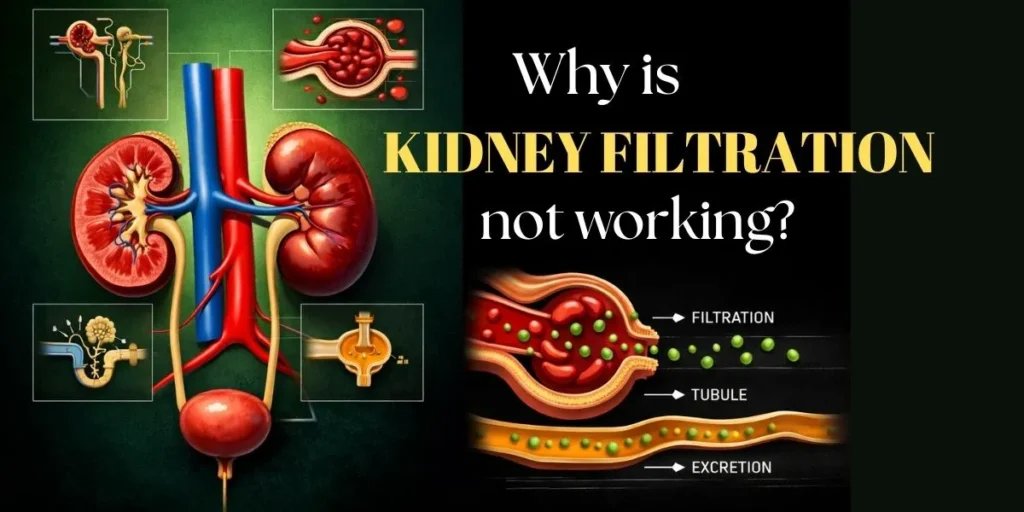
Kidney filtration is one of the most important life-sustaining functions in the human body. Every day, your kidneys filter 180 liters of blood. When the process of kidney filtration begins to slow down, waste products begin to accumulate in the blood, which can be a reason for serious health concerns.
In the United States and the United Kingdom, there is a growing number of cases of decreased kidney function due to the growing number of cases of diabetes, hypertension, and the aging population. According to the Centers for Disease Control and Prevention, there are approximately 37 million adults in the U.S. with chronic kidney disease. In the United Kingdom, millions of people are suffering from early-stage kidney disease, as stated by the National Health Service.
Your Kidneys Work 24/7 — Are You Protecting Them?
Your kidneys are always working. They try to filter 180 liters of blood daily. They remove waste materials such as urea and creatinine from the blood. They also control the electrolytes in the blood, such as sodium and potassium. The process of filtration takes place in very small units called nephrons. Almost one million nephrons are present in each kidney.
If the nephrons get damaged, the rate of filtration of the kidneys gets affected. The body does not react to this immediately, and that is why blood tests, especially the test for eGFR, are so important.
What Is Kidney Filtration and Why It Matters
Kidney filtration is the process by which the body eliminates waste products, toxins, and excess fluids from the bloodstream. It also regulates:
- Blood enters the kidneys through renal arteries – The kidneys receive oxygenated blood that contains waste products that need to be eliminated.
- Filtration takes place in the glomeruli – The glomeruli are small clusters of blood vessels that work like filters to separate waste products and excess fluids from the blood.
- Filtered blood returns to the body – The cleaned blood is then returned to the body to function properly.
- Waste is eliminated through urine – The waste products are eliminated through the urinary system.
If any stage of this filtration process is damaged, the body starts to experience imbalances.
Know Your Numbers, Protect Your Life
The main test used to assess the filtration rate of the kidneys is the Estimated Glomerular Filtration Rate (eGFR).
- 90 or higher – Normal kidney function.
- 60-89 – Mild impairment.
- 30-59 – Moderate kidney disease.
- 15-29 – Severe impairment.
- Lower than 15 – Kidney failure.
It is important to get regular tests, especially if one is above 60 years of age, a diabetic, or has high blood pressure.
Why is Kidney Filtration not working?
Kidney filtration can slow down gradually or suddenly based on the reason.
Reasons for Reduced Kidney Filtration
- Diabetes – High sugar levels in the blood damage the small blood vessels in the kidneys over time.
- Hypertension – High blood pressure damages the filtering units in the kidneys.
- Chronic kidney disease (CKD) – The kidneys gradually lose their ability to filter blood effectively.
- Kidney infections – Repeated infections can damage the kidneys.
- Urinary obstruction – Kidney stones or an enlarged prostate gland can obstruct urine flow.
- Autoimmune disorders – Conditions such as lupus can damage the kidneys.
- Certain medications – Long-term use of NSAIDs can damage the kidneys.
According to the National Kidney Foundation, diabetes and hypertension are the primary reasons for reduced kidney filtration in Western societies.
When Your Kidneys Whisper, It’s Time to Listen
Problems with kidney filtering can have subtle symptoms in the early stages. Paying attention to these small changes can help avoid serious complications down the road.
Notice if you have:
- Unusual fatigue
- Urination problems
- Swelling in your body
- High blood pressure
Make a doctor’s appointment right away.
Acute vs. Chronic Kidney Filtration Decline
Kidney filtration problems can be sudden or occur over a period of time.
Acute Kidney Injury (AKI)
Acute kidney injury is a sudden loss of kidney filtration due to dehydration, infection, serious illness, or medication reaction. Often, kidney function can return to normal with prompt treatment.
Chronic Kidney Disease (CKD)
Chronic kidney disease is a progressive loss of kidney filtration over a period of months to years.
Is Low Kidney Filtration Dangerous?
Yes, low kidney function can be a danger. If the kidneys are not filtering blood properly, toxins will build up in the body.
Possible complications include:
- Fluid overload
- Electrolyte imbalance
- Hyperkalemia
- Heart problems
- Weakened bones
- Anemia
Early detection is important. Many people do not know that their kidneys are not filtering properly until routine blood work shows abnormal values.
Risk Factors in the US and UK
Certain groups of people are at a higher risk for decreased kidney filtration.
- People over 60 years of age – With age, the functioning of the nephrons decreases.
- People with diabetes – High sugar levels in the blood hasten the deterioration of the kidneys.
- People with hypertension – The constant pressure on the kidneys causes damage to the filtration units.
- Family history of kidney problems – Genetic factors put a person at a higher risk.
- Obese people – Obesity is a major factor in metabolic stress.
- People with cardiovascular disease – The heart and kidneys have a close relationship.
The U.S. and UK health care systems stress screening for high-risk groups.
Can Kidney Filtration Improve?
The degree of improvement depends on the underlying cause and the stage of kidney damage.
- Temporary dehydration – Usually reversible with adequate hydration.
- Medication-related stress – May improve by adjusting medications.
- Early-stage CKD – Often slowed by lifestyle and medication changes.
- Advanced CKD – Management focuses on stabilization and control of symptoms.
The National Institute of Diabetes and Digestive and Kidney Diseases emphasizes that early treatment can greatly delay the progression.
Strong Kidneys Start With Smart Choices
Diet and lifestyle changes are very important for maintaining healthy kidney filtration.
Diet and Lifestyle Changes That Help Protect Kidney Function
- Limit sodium in your diet to manage blood pressure.
- Avoid foods with preservatives and additives.
- Maintain a healthy body weight to avoid metabolic stress.
- Exercise to improve circulation and heart health.
- Quit smoking to protect blood vessels.
Making moderate changes to your lifestyle can help slow down the progression of kidney filtration.
Better Monitoring, Better Outcomes
Monitoring is very important for protecting your kidneys from damage.
- Annual kidney function tests for high-risk patients.
- Regular blood pressure checks.
- Managing diabetes.
- Testing if eGFR levels drop.
Monitoring your condition closely helps you make changes to your treatment plan early on.
Balance Today for Stronger Kidneys Tomorrow
Kidney filtration is very much linked to your overall health. Taking care of your heart health, managing your metabolism, and reducing inflammation can all help you maintain healthy kidney filtration.
Healthy lifestyle habits help you protect not only your kidneys but also your heart health.
When Should You Visit a Doctor?
You should visit a doctor if you notice the following symptoms:
- Swelling that persists
- Fatigue that persists
- Unusual changes in urine output
- High blood pressure
- Abnormal lab results for diabetes
Blood tests are usually the first sign of impaired kidney filtration.
Early Action Today, Healthy Kidneys Tomorrow
Kidney filtration is an invisible but powerful force that keeps your body in top condition. In the United States and the United Kingdom, the number of cases of kidney disease is on the increase—but with early intervention and preventive treatment, the dangers can be significantly reduced.
By being aware of your risk factors, monitoring your eGFR, living a healthy lifestyle, and maintaining a close relationship with your healthcare provider, you can protect your kidney filtration rates for years to come.
If you are concerned about your kidney filtration rate, it is important to seek guidance from a qualified healthcare professional. At Medilux Ayurveda, we provide personalized Ayurvedic treatment and online consultations for individuals across the United States and the United Kingdom, serving patients in every city. Our approach focuses on supporting kidney health naturally and safely. Don’t wait to take the next step—book your online consultation today and start your journey toward better kidney health.
Frequently Asked Questions
Is low kidney filtration dangerous?
Yes, because low kidney filtration can cause a buildup of toxins in the body, which can be life-threatening if left untreated.
Can drinking more water solve kidney filtration problems?
Drinking water is good for the kidneys, but it won’t solve the problem of damaged kidneys. Drinking water should be done as advised by a doctor.
What are the reasons for a sudden drop in kidney filtering?
A sudden drop in kidney filtering can be caused by dehydration, infection, drug reactions, or kidney injury.
Is a drop in kidney filtration always permanent?
Yes, because a drop in kidney filtration can be permanent, but in some cases, it can be reversed.