
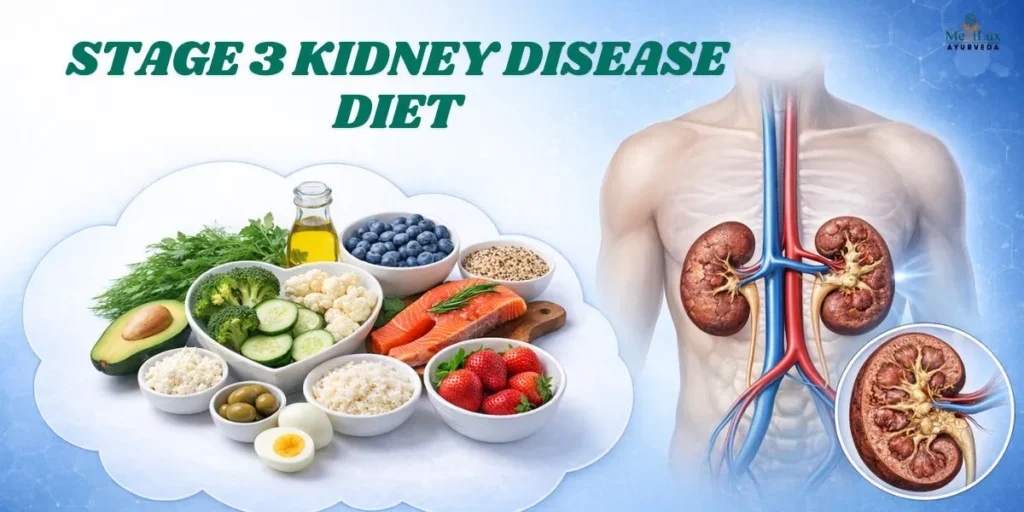
When you were diagnosed with Stage 3 Chronic Kidney Disease (CKD), one of the very first questions you may have asked is, “What do I eat?”
That’s completely normal.
The truth is that a diet for someone suffering from a kidney disease at stage 3 can be a powerful force in helping to slow the progression of kidney disease, manage symptoms, and maintain overall health. Although a diet cannot prevent kidney disease from occurring in the first place, it can help to limit the strain placed on the kidneys.
In this comprehensive guide, you’ll get to know: Just what a stage 3 kidney disease diet really means, Foods to eat, Foods to avoid, Protein, potassium, and phosphorus.
Alright, let’s break it down in simple, clear terms.
What Is a Stage 3 Kidney Disease Diet?
In stage 3 CKD, your kidneys operate only between 30 and 59 percent of their normal function. At this stage, you may start to develop wastes that can accumulate in your blood.
A stage 3 kidney disease diet is meant to:
- Reduce kidney workload
- Control Blood Pressure
- Balance the electrolytes
- Prevent waste build-up
- Slow disease progression
The diet usually centers on controlling:
-
Sodium
-
Protein
-
Potassium (if elevated)
-
Phosphorus
It’s also not about starving yourself, but rather eating smarter.
Why Diet Matters in Stage 3 CKD
Your kidneys clean the food you take in. When your kidneys are not functioning well, some nutrients can be harder to excrete.
For example:
- Too much sodium in the body increases blood pressure.
- Too much protein means that more waste products have to be removed by the kidneys.
- Having too much potassium may keep the heart from beating normally.
- There is a possibility of weakened bones if the level
Healthy food choices will reduce the strain on your kidneys and benefit your health.
Foods to Eat with Stage 3 Kidney Disease
Let’s start with the good news: we have a great variety of foods we can eat.
1. Low-Sodium Foods
Sodium control is arguably one of the most significant components of a renal-friendly diet.
Choose:
-
Fresh vegetables
-
Fresh fruits
-
Home-cooked meals
-
Herbs and spices instead of salt
-
Unsalted nuts (in moderation)
Aim for less than 2,300 milligrams per day. However, follow your doctor’s advice.
2. Moderate, High-Quality Protein
Protein is vital, yet too much protein may strain the kidneys.
Good protein sources:
-
Egg whites
-
Skinless chicken
-
Fish
-
Tofu
-
Small portions of lean meat
Most people with stage 3 Chronic Kidney Disease are encouraged to eat moderate amounts of protein, but no high-protein diet.
3. Kidney-Friendly Fruits
Potassium levels being normal, fruits may be safe in moderation.
Lower-potassium options include:
-
Apples
-
Berries
-
Grapes
-
Pineapple
-
Peaches
If your levels of potassium are high, your doctor might advise you to do certain things.
4. Vegetables That Are Generally Safer
-
Green beans
-
Cabbage
-
Cauliflower
-
Bell peppers
-
Lettuce
-
Cucumbers
Cooking vegetables and removing water may contribute to lower potassium levels.
5. Healthy Fats
Heart health is crucial in CKD.
Choose:
-
Olive oil
-
Avocado oil
-
Small portions of nuts
-
Fatty fish like salmon
Trans fats and highly processed oils should be avoided.
Foods to Avoid in Stage 3 Kidney Disease
Now, let’s discuss what to avoid or restrict.
1. High-Sodium Foods
-
Processed meats
-
Fast food
-
Canned soups
-
Frozen meals
-
Salty snacks
-
Pickles
These substances raise blood pressure and increase fluid retention.
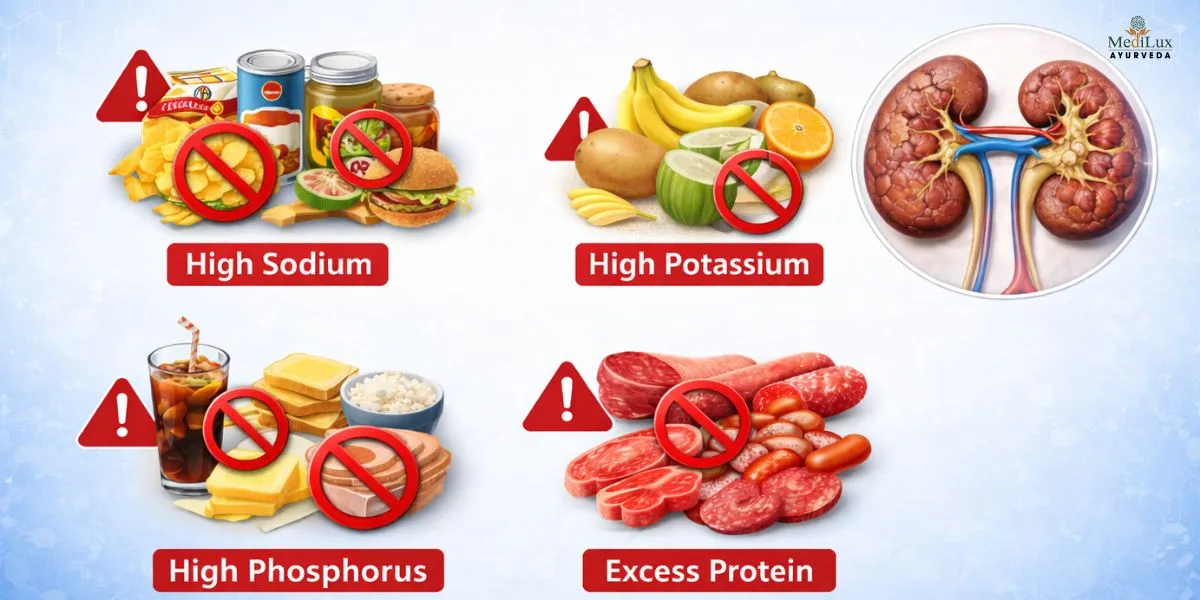
2. Excess Protein
High-protein foods are hard on kidneys.
Avoid:
-
Large portions of red meat
-
Protein supplements (unless prescribed)
-
Excessive dairy
Achieving balance is essential.
3. High-Potassium Foods (If Levels Are High)
However, not everyone has to reduce their intake of potassium. It is only necessary to do this if blood levels are raised.
Common high-potassium foods:
-
Bananas
-
Oranges
-
Potatoes
-
Tomatoes
-
Spinach
-
Dried fruits
Lab results and the advice of the doctor must always be followed.
4. High-Phosphorus Foods
Phosphorus, too, has a tendency to accumulate and weaken bones
Limit:
-
Dark cola drinks
-
Processed cheese
-
Packaged snacks
-
Organ meats
-
Processed foods with “phos” in ingredients
Check labels carefully.
How Much Protein Should You Eat in Stage 3 CKD?
Recommendations regarding protein intake differ, and most health professionals advise people to take in:
0.6 to 0.8 grams of protein per kilogram of body weight per day.
For example:
The protein requirement may be around 42 to 56 grams a day for a person who weighs 70 kg.
Too little protein can cause you to lose muscle, while too much puts additional strain on your kidneys. A renal dietitian can suggest an appropriate level for you.
Potassium and Stage 3 Kidney Disease
Potassium assists in the control of heart and muscle functions.
In stage 3 CKD:
- Some patients present with normal potassium
- Some people develop high potassium levels in the blood
Tests on your blood will show whether restrictions are needed.
Potassium-Rich Foods: Never cut out Potassium-Rich Foods
Phosphorus Control in Stage 3 CKD
Healthy kidneys remove large amounts of phosphorus from your body. Your body may retain too much phosphorus if your kidneys are not working.
High phosphorus can result in:
-
Bone weakness
-
Calcium imbalance
-
Vascular calcification
Focus on cutting down processed food intake rather than boycotting natural sources altogether.
Sample Stage 3 Kidney Disease Meal Plan (1 Day)
| Meal | Menu | Why It’s Kidney-Friendly |
|---|---|---|
| Breakfast | Oatmeal made with water, topped with blueberries + 2 egg whites + Herbal tea | Moderate protein, low sodium, lower potassium fruit |
| Mid-Morning Snack | 1 small apple + Unsalted crackers | Low potassium fruit, low sodium snack |
| Lunch | Grilled skinless chicken (3 oz) + White rice + Steamed green beans + Olive oil drizzle | Controlled protein, low potassium vegetables, heart-healthy fat |
| Afternoon Snack | Handful of unsalted popcorn or rice cakes | Low sodium, kidney-friendly carbohydrate option |
| Dinner | Baked salmon (3 oz) + Small portion pasta with garlic & olive oil + Steamed cabbage | Balanced protein, low phosphorus, low potassium vegetables |
| Evening Option (if needed) | Small bowl of strawberries or grapes | Lower potassium fruit choice |
Hydration Tip
Drink fluids as recommended by your healthcare provider. Most Stage 3 patients do not require strict fluid restriction unless advised.
Can Diet Improve Stage 3 Kidney Disease?
The diet cannot cure existing kidney disease.
However, it can:
- Slow progression
-
Reduce complications
-
Improve blood pressure
-
Control blood sugar
-
Support heart health
Even many people live for many years in stage 3 if they follow medical recommendations and a healthy diet.
Additional Lifestyle Tips for Stage 3 CKD
Diet is only one aspect of the equation.
Also focus on:
-
Blood pressure control
-
Diabetes management
-
Regular exercise
-
Maintaining healthy weight
-
Avoiding smoking
-
Limiting alcohol
-
Avoiding unnecessary NSAIDs
Small daily habits lead to long-term protection.
When to See a Renal Dietitian
You should consult a renal dietitian if:
-
Your potassium levels fluctuate
-
You have diabetes
-
You’re unsure about protein intake
-
Your kidney function is declining
-
You feel overwhelmed about food choices
Personalized nutritional plans are more effective than general advice.
Final Thoughts
While it may not be said enough, a stage 3 kidney disease diet isn’t about restriction; it’s about protection.
Therefore, controlling sodium intake, balancing protein, managing potassium and phosphorus, and avoiding processed foods can help decrease the amount of stress produced in the kidneys to a large extent.
The key is consistency.
Thus, work closely with your healthcare practitioner, monitor lab values, and gradually make lifestyle changes in diet.
However, with appropriate care, people with stage 3 CKD have normal kidney function over many years.
Book your online consultation with Medilux Ayurveda today. Our services are available across all cities in the United States and the United Kingdom. Contact us now to learn more about our Ayurvedic kidney treatment and begin your journey toward better health.