
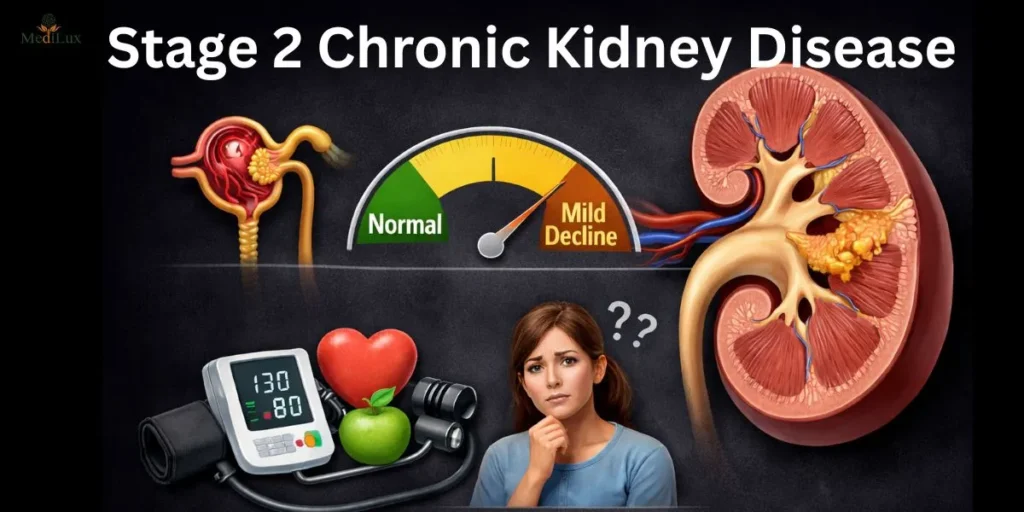
Having stage 2 chronic kidney disease (CKD) can be quite a scary experience. Many people in the United States of America, including New York City, Los Angeles, Chicago, Houston, and Phoenix, often search the internet asking the same question: “How serious is stage 2 kidney disease?”
The good news is that stage 2 CKD is still an early stage of kidney damage. At this stage, the kidneys are only slightly impaired. With the right treatment and care, many patients live a long and healthy life without ever developing an advanced stage of the disease.
This guide will help you understand everything you need to know about stage 2 CKD.
What Is Stage 2 Chronic Kidney Disease?
Chronic kidney disease is classified into five stages depending on a test known as the estimated glomerular filtration rate (eGFR). This is the measure of how well your kidneys are filtering waste from your blood.
In stage 2 chronic kidney disease:
- eGFR ranges between 60 and 89
- There is mild loss of kidney function
- There is evidence of kidney damage (such as protein in the urine)
It is important to note that a value of eGFR between 60 and 89 does not necessarily mean that you have chronic kidney disease. Your doctor must also find evidence of kidney damage for at least three months.
Stage 2 is referred to as early kidney disease. This is the critical period to act.
Is Stage 2 CKD Serious?
Stage 2 CKD is not kidney failure. It does not indicate that dialysis is imminent. However, it is a warning that your kidneys require protection.
If left unattended, kidney damage could gradually worsen. However, with effective treatment and changes in your lifestyle, the progression of kidney damage can be significantly delayed.
In major cities such as Dallas, Miami, Atlanta, and Seattle, kidney specialists observe that patients with early-stage kidney disease who take an active role in managing their health are able to maintain healthy kidneys for years.
Early detection puts you ahead of the game.
Common Causes of Stage 2 Chronic Kidney Disease
Most instances of stage 2 CKD are associated with underlying health conditions.
The most common causes include:
- Type 2 diabetes
- Hypertension (high blood pressure)
- Heart disease
- Family history of kidney disease
- Long-term use of NSAIDs (pain medications)
- Obesity
In the United States, diabetes and high blood pressure are the two major causes of chronic kidney disease.
Controlling these conditions is the key to protecting kidney health.
Symptoms of Stage 2 CKD
One of the reasons stage 2 CKD is so commonly missed is because there are few or no symptoms.
However, patients may experience:
- Mild fatigue
- Slight swelling of the feet and ankles
- Changes in urination patterns
- Foamy urine (indicative of protein in the urine)
However, most patients will feel perfectly normal.
This is why regular lab work is so crucial, particularly for those in high-risk groups.
How Is Stage 2 CKD Diagnosed?
Typically, diagnosis will involve:
- Blood test to determine eGFR
- Urine test to check for protein
- Blood pressure check
- Review of medical history
Physicians will diagnose CKD when abnormalities have been present for at least three months.
Annual check-ups are highly recommended, especially for those over 40 or those with diabetes or hypertension.
Stage 2 Chronic Kidney Disease Treatment
There is no quick remedy available for CKD, but its treatment in the early stages can greatly help in slowing down its progression.
Treatment aims at protecting the kidneys from further damage.
1. Blood Pressure Control Is Critical
High blood pressure can cause damage to the blood vessels of the kidneys over time.
However, doctors usually advise patients to keep their blood pressure below:
130/80 mmHg
Medicines that are usually prescribed include:
- ACE inhibitors
- ARBs
These medicines also help in reducing the leakage of proteins in the urine.
2. Blood Sugar Management for Diabetics
If the patient has diabetes, then controlling blood sugar levels becomes a priority.
Steps include:
- Checking blood sugar levels regularly
- Eating a healthy diet
- Taking medications as advised
- Staying physically active
Poor blood sugar control accelerates kidney damage.
Stable glucose protects filtration units.
3. Diet Recommendations for Stage 2 CKD
Dietary changes can help decrease the workload of the kidneys.
General advice:
- Cut sodium intake (limit to 2,300 mg per day or less)
- Eat fresh fruits and vegetables
- Consume moderate amounts of protein
- Avoid heavily processed foods
- Limit sugary drinks
In contrast to the advanced stages of CKD, there is no need to restrict potassium and phosphorus intake unless laboratory values indicate abnormalities.
A registered dietitian can offer personalized advice.
4. Exercise and Physical Activity
Regular physical activity can help improve cardiovascular and metabolic function.
Safe activities include:
- Walking
- Swimming
- Cycling
- Light weight training
The goal is to accumulate at least 150 minutes of moderate-intensity activity per week.
Regular exercise can help manage:
- Blood pressure
- Blood sugar
- Body weight
- Inflammation
All of which are beneficial to kidney health.
5. Avoid Kidney-Damaging Substances
Some substances can further damage the kidneys.
Avoid or limit:
- Overuse of NSAIDs (ibuprofen, naproxen)
- Smoking
- Excessive alcohol
- Unregulated supplements
In all cases, it is important to consult with your healthcare provider before taking new supplements.
Ayurveda Treatment for Stage 2 Chronic Kidney Disease with Medilux Ayurveda
In the initial phase of CKD, the Ayurvedic treatment aims at slowing down the progression, enhancing the strength of the kidneys, and correcting the imbalances.
At Medilux Ayurveda, the treatment protocol is usually individualized and may include the following:
- Dosha Balancing Approach – The treatment aims at balancing Vata, Pitta, and Kapha, which are thought to affect the kidneys and urinary system (Mutravaha Srotas).
- Herbal Formulations – Certain herbs like Punarnava (for fluid management), Gokshura (for urinary support), and Varun (for urinary tract support) may be advised depending on the case.
- Natural Detox Support – Mild detoxification techniques may be employed to decrease the Ama (toxin load) without further burdening the kidneys.
- Dietary Regulation (Pathya-Apathya Guidance) – Personalized dietary guidance emphasizing light and easily digestible foods, reduced salt consumption, and a balanced diet to help the kidneys function properly.
- Lifestyle Modifications – Stress management, sound sleep, and gentle exercise are recommended to enhance blood circulation and metabolic regulation.
- Monitoring and Integrated Care – Periodic kidney function tests and coordination with mainstream medical care are emphasized to ensure safety and monitor progress.
Ayurvedic treatment in stage 2 CKD is a complementary therapy. The patient should follow all medications as usual and consult both the nephrologist and the Ayurvedic physician for safe and integrated management.
Can Stage 2 Chronic Kidney Disease Be Reversed?
In most instances, the existing kidney damage cannot be reversed entirely.
However, the progression of the disease can be slowed down or even stabilized for many years.
Early treatment makes a world of difference. Some patients can have normal kidney function for many decades with proper care.
The aim is to protect, not to panic.
Life Expectancy With Stage 2 CKD
Most patients with stage 2 chronic kidney disease can live a normal life span, provided the underlying conditions are under good control.
The most important factors that affect the outcome include:
- Control of blood pressure
- Control of blood sugar
- Cardiovascular health
- Lifestyle habits
- Follow-up care by a physician
The progression of the kidney disease is not a certainty.
When to See a Nephrologist
You may require referral to a nephrologist if:
- eGFR declines quickly
- Protein in urine increases
- Blood pressure becomes difficult to manage
- Additional complications appear
Early referral to a nephrologist often results in improved results.
Large medical institutions in Boston, San Francisco, Denver, and Philadelphia stress early nephrology referral for maximum kidney protection.
Monitoring Is Essential
Stage 2 CKD requires regular follow-up.
Most patients should:
- Check kidney function every 6–12 months
- Monitor blood pressure at home
- Test urine protein as directed
Regular monitoring helps in detecting changes before symptoms occur.
Final Thoughts
In the United States, from New York City to Los Angeles, from Chicago to Houston, millions of people are living with early-stage kidney disease without even knowing it. Stage 2 Chronic Kidney Disease is not an emergency, but it is a warning sign that you should not ignore. The choices you make today can protect your kidneys for years to come. Early detection and consistent care make a big difference.
For those looking for a more holistic approach, Medilux Ayurveda provides customized Ayurvedic treatment plans for kidney disease for every individual in all U.S. cities through online consultations. If you are ready to take charge of your kidney health with structured support, book your online consultation today and take the first step towards improved long-term health.