
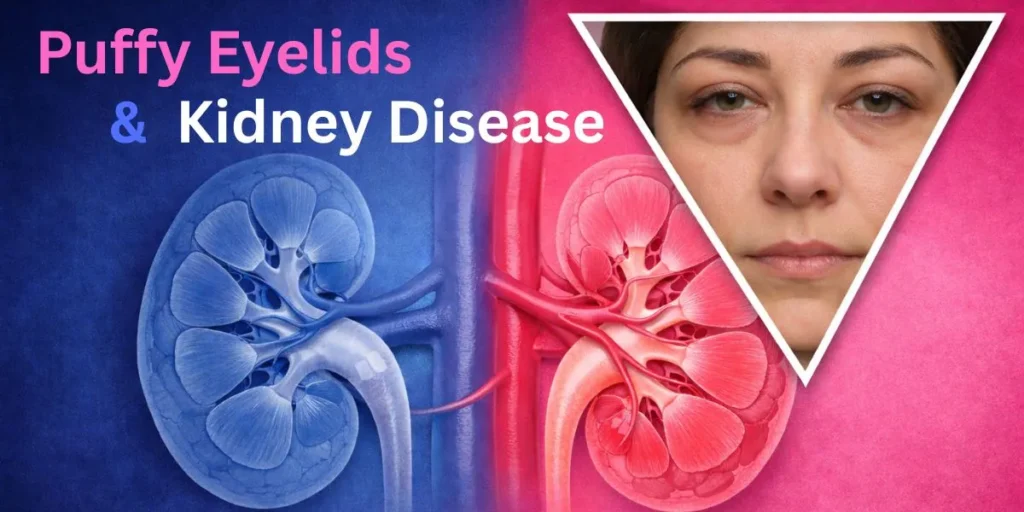
You wake up, shuffle to the mirror, and there they are — puffy eyelids, staring back at you like they had an all-night party without you.
Your brain starts firing off theories:
Did I cry in my sleep? Eat too many crisps? Forget to blink for eight hours?
And then — because the internet exists — a scarier thought sneaks in:
“Wait… could this be kidney disease?”
Puffy Eyelids and Kidney Disease: What’s the Connection?
Before panic sets in, take a breath. Let’s talk about what puffy eyelids usually mean, when they might be connected to kidney disease, and how to tell the difference — without spiralling.
Can Kidney Disease Cause Puffy Eyelids?
Short answer: yes, kidney disease can cause puffy eyelids — but it’s uncommon.
Most people with swollen eyelids do not have kidney disease. In fact, the vast majority of cases are caused by far more boring (and much less serious) things like allergies, sleep, salt, or sinus issues.
That said, in certain kidney conditions, especially those affecting how the body handles fluid and protein, swelling around the eyes can happen. It’s not usually the first or only sign — and that detail matters a lot.
Why Kidney Disease Can Lead to Puffy Eyelids (The Simple Version)
Your kidneys are quiet overachievers. All day, every day, they filter waste, balance fluids, and keep important proteins where they belong.
When they’re not working properly, a couple of things can happen:
1. Fluid Starts Hanging Around
If your kidneys can’t remove fluid efficiently, your body may start holding onto it. That extra fluid has to go somewhere — and the delicate tissue around your eyes is a prime target.
2. Protein Leaks Out (Rude, But True)
Some kidney diseases cause protein to leak into the urine. When protein levels in the blood drop, fluid is more likely to seep into surrounding tissues, leading to swelling — especially around the eyes. This is sometimes called periorbital edema, which sounds dramatic because it kind of is.
3. Why the Eyes Get Puffy First
The skin around your eyes is thin and soft, so even small fluid shifts show up fast. It’s like the body’s early-warning system — but not a very specific one.
Puffy Eyelids in the Morning: Normal or Not?
Morning puffiness is so common it practically deserves its own support group.
Totally Normal Reasons Your Eyelids Are Puffy
- You slept flat or face-down
- You had salty food the night before
- Allergies are doing their thing
- You didn’t sleep well
- You cried, rubbed your eyes, or had a cold
In these cases, puffiness usually fades within an hour or two of being upright and moving around.
When Morning Puffiness Might Be Worth Checking Out
You may want to pay closer attention if:
- The swelling doesn’t improve during the day
- It’s getting worse over time
- It shows up alongside swelling in your legs, feet, or hands
- You notice changes in your urine or energy levels
One puffy morning doesn’t mean much. A pattern is what matters.
Other Symptoms That May Point to Kidney Disease
Here’s an important truth:
Kidney disease almost never announces itself with puffy eyelids alone.
Other symptoms of kidney disease may include:
- Swelling in the ankles, feet, legs, or hands
- Foamy or bubbly urine
- Changes in how often you urinate
- Fatigue that doesn’t match your sleep
- Loss of appetite
- High blood pressure
If puffy eyelids are part of a bigger picture, that’s when a medical check-in makes sense.
Common Causes of Puffy Eyelids (That Have Nothing to Do With Kidneys)
To keep things grounded, here are the most common culprits behind swollen eyelids — and they’re all way more likely than kidney disease:
Allergies
Seasonal allergies are the MVP of puffy eyelids. If there’s itching, redness, or watering involved, this is a strong suspect.
Sleep (Or Lack of It)
Poor sleep, irregular sleep, or just a rough night can lead to fluid pooling around the eyes.
Salt
Too much salt causes temporary fluid retention. Your eyelids just happen to be very honest about it.
Sinus Issues
Congestion and inflammation can make your whole face feel puffy — eyes included.
Aging
As we get older, the tissues around the eyes naturally change, making puffiness more noticeable.
When to See a Doctor or GP
It’s a good idea to speak with a primary care doctor (US) or GP (UK) if:
- Eyelid swelling lasts more than a few days
- Swelling is severe, painful, or sudden
- You have swelling in multiple parts of your body
- You notice changes in urine, blood pressure, or energy
- You have a personal or family history of kidney disease
Sometimes the biggest benefit of seeing a doctor is simply peace of mind.
How Kidney Disease Is Checked (No Dramatics Required)
If kidney involvement needs to be ruled out, testing is usually straightforward:
- Urine tests to check for protein or blood
- Blood tests to assess kidney function
- Blood pressure checks
- Imaging, in some cases
These are routine tests — not a sign that something terrible is assumed.
So… Should Puffy Eyelids and Kidney Disease Make You Worry?
Here’s the reassuring bottom line:
Most puffy eyelids are harmless and temporary.
Kidney disease is a rare cause — especially on its own.
If your eyelids look like they’ve been through a silent drama but the rest of you feels fine, chances are it’s something simple. If swelling sticks around, spreads, or comes with other symptoms, that’s your cue to get checked — calmly, not urgently.
Your body is good at sending signals. The trick is learning which ones deserve a second look.
Medical Disclaimer
This article is for informational purposes only and does not replace professional medical advice. Always consult a qualified healthcare professional for diagnosis or treatment.