
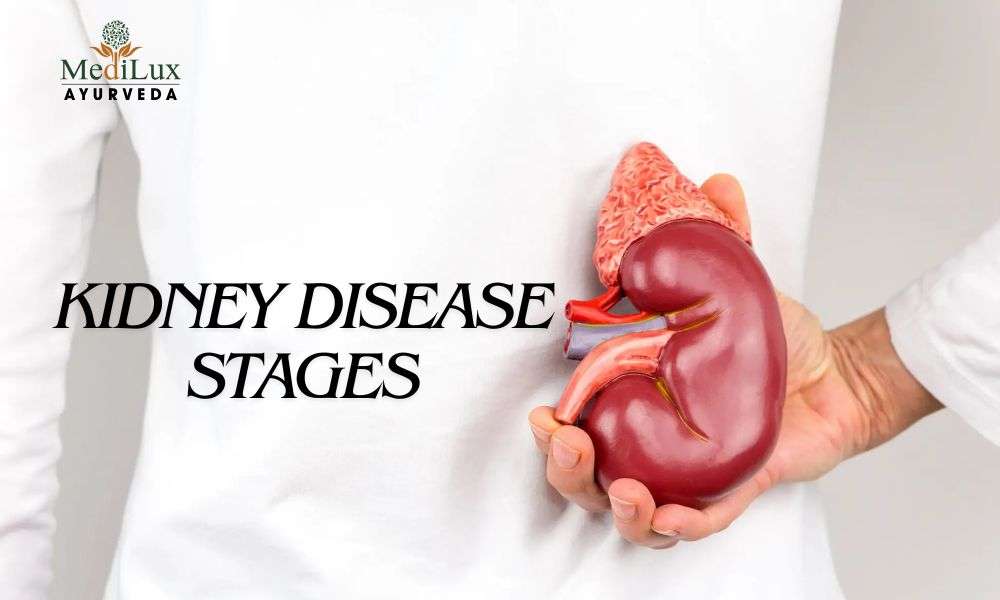
Chronic Kidney Disease (CKD), a severe and emerging health issue in the US, affects a large number of adults every year. Most individuals are not even aware that they have kidney disease until it progresses to an advanced stage. As a result, it is important to know the kidney disease stages.
The article provides an informative guide to the five phases of kidney disease symptoms, GFR levels, treatment options, and dialysis and transplant requirements. The guide aims to help patients, caregivers, and people at risk with kidney problems to take educated natural remedies for kidney health.
What Is Chronic Kidney Disease (CKD)?
Chronic Kidney Disease is a condition in which the kidneys slowly stop being able to filter waste out of the blood. CKD most often occurs after several months or years because of associated conditions such as:
- Diabetes
- High blood pressure
- Chronic urinary tract infection.
- Kidney Stones
- Autoimmune diseases
- Genetic renal disorders
If not treated, CKD may advance to kidney failure. This will necessitate dialysis or a kidney transplant.
Ways Kidney Disease Stages Can Be Established
Stages of kidney disease are measured on the basis of an “estimated glomerular filtration rate” or “eGFR” via blood tests. GFR indicates the efficiency of the kidneys to filter the wastes from the blood.
Main Criteria Employed in Staging Kidney Disease:
- eGFR level
- Presence of protein in urine
- Kidney imaging results
- Symptoms and complications
Kidney Disease Stages Chart (GFR Levels)
| Stage | GFR (mL/min) | Kidney Function | Description |
|---|---|---|---|
| Stage 1 | 90 or higher | Normal or high | Kidney damage with normal function |
| Stage 2 | 60–89 | Mild decrease | Early kidney disease |
| Stage 3a | 45–59 | Mild–moderate | Beginning complications |
| Stage 3b | 30–44 | Moderate–severe | Higher risk of progression |
| Stage 4 | 15–29 | Severe decrease | Preparing for dialysis |
| Stage 5 | Below 15 | Kidney failure | Dialysis or transplant needed |

Stage 1 Kidney Disease: Early Kidney Damage
GFR: 90 or higher
At Stage 1, the kidneys seem to be functioning properly; however, signs of damage to the kidneys include the presence of proteins in the urine or an abnormal imaging study.
Common Symptoms
- Generally, there are no noticeable symptoms
Mild fatigue
Very small changes in urination (often overlooked)
Treatment and Management
Control blood pressure and blood sugar levels
Eat a kidney-friendly diet
Drink fluids Regular follow-up visits by a healthcare practitioner
Stage 2 Kidney Disease: Mild Kidney Function Reduction
GFR: 60–89
Stage 2 indicates mild kidney damage with a slight reduction in filtering ability.
Common Symptoms
Fatigue
Swelling in hands or feet (mild)
Changes in urine frequency
Treatment and Management
Treat underlying conditions (diabetes, hypertension)
Reduce sodium intake
Avoid NSAIDs (painkillers that harm kidneys)
Annual kidney function testing
Stage 3 Kidney Disease (3a and 3b): Moderate Kidney Damage
GFR: 30–59
Stage 3 is when many patients are first diagnosed. Kidney function is significantly reduced, and complications may begin.
Common Symptoms
Persistent fatigue
Swelling in legs and ankles
Back pain
Frequent urination at night
Anemia
Bone weakness
Treatment and Management
Referral to a nephrologist (kidney specialist)
Protein-controlled diet
Blood pressure and cholesterol management
Treatment for anemia and bone disease
Stage 4 Kidney Disease: Severe Kidney Damage
GFR: 15–29
In the fourth stage, renal functions are significantly impacted, and preparation for replacement of the kidneys commences.
Common Symptoms
Severe fatigue
Nausea and vomiting
Loss of appetite
Concentration difficulties
Swelling in face and legs
Difficulty in breathing
Treatment and Management
Strict kidney diet
Fluid management
Dialysis education and planning
Evaluation for kidney transplant
Careful medical attention is required at this point.
Stage 5 Kidney Disease: Kidney Failure / End Stage Renal Disease
GFR: Below 15
Stage 5 is sometimes called end-stage renal disease, or ESRD. Kidneys at this stage are not capable of sustaining life by themselves.
Common Symptoms
Severe weakness
Confusion
Chest pain
Severe swelling
Little or no urine output
Kidney Disease Stages Treatment
Peritoneal dialysis
Kidney transplant
Conservative (supportive) care in selected cases
Supportive care in selected situations In the USA, dialysis or transplant is required to survive at this point.
Kidney Disease Symptoms According to the Progression of the Disease
- Early stages of kidney disease: Often silent
- Mid Stages: Fatigue, swelling, urination changes
- Last stages: Vomiting, Difficulty breathing, Confusion
Whether Kidney Disease Progression Can be Slowed
Yes. In addition, although CKD is not reversible, its progression can frequently be slowed down by:
- Early diagnosis
- Appropriate medication
- Kidney-friendly diet
- Controlling blood pressure
- Diabetes management is a Regular nephrology check-ups
When to See a Doctor
If you feel any of the following symptoms, you need to
- Persistent swelling
- Blood or protein in the urine
- Fatigue for weeks
- Family history of kidney disease
- Diabetes or high blood pressure
Conclusion
Understanding the stages of kidney disease—from Stage 1 to Stage 5—allows patients to take timely and informed action to protect kidney health. While chronic kidney disease stages often cannot be completely reversed, its progression can be effectively managed with early intervention, lifestyle changes, and holistic support. Ayurvedic treatment focuses on restoring balance in the body, supporting kidney function naturally, and addressing the root causes rather than just symptoms.