
eGFR Levels for Kidney Function: What They Mean & Why They Matter (USA Guide)
Understanding the egfr Levels for Kidney Function is very crucial for the early detection of kidney problems and the protection of long-term health. In the United States alone, millions of adults live with CKD, and many don’t even realize it. Since kidney disease often develops silently, a simple blood test that calculates your eGFR can make a life-saving difference.
Below, we’ll outline what eGFR is, what normal values are according to age, what low numbers mean, and when to see the doctor-all for readers in the USA.
What Is eGFR?
Estimating glomerular filtration rate (eGFR) is an important calculation that measures how well your kidneys are functioning at filtering waste out of your blood. Your kidneys filter waste, maintain fluid balance, maintain balance of electrolytes, and help regulate blood pressure. If the function of your kidneys declines, then the amount of waste builds up in your body.
Doctors calculate eGFR using:
- Serum creatinine (from a blood test)
- Age
- Gender
- Body size
Most U.S. labs automatically report eGFR results whenever creatinine is tested.
Normal eGFR Levels in Adults
Milliliter per minute per 1.73 m² is the unit used for measuring eGFR.
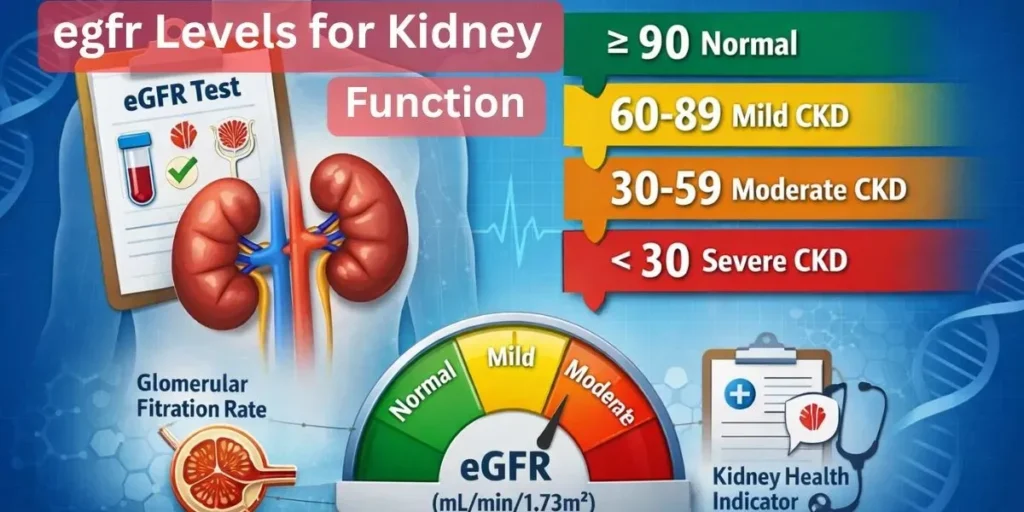
Here’s how egfr Levels for Kidney Function are categorized:
| eGFR Level | Kidney Function | CKD Stage |
| 90 or above | Normal kidney function | Stage 1 (if other signs of damage) |
| 60–89 | Mild decrease | Stage 2 |
| 45–59 | Mild to moderate decrease | Stage 3A |
| 30–44 | Moderate to severe decrease | Stage 3B |
| 15–29 | Severe decrease | Stage 4 |
| Below 15 | Kidney failure | Stage 5 |
A normal eGFR value is typically above 90; however, it tends to decrease with increasing age. Many elderly Americans have mild symptoms of low eGFR values.
eGFR Levels by Age
It’s normal for kidney function to slightly decline with age. For example:
- 20–29 years: Average eGFR ~116
- 30–39 years: ~107
- 40–49 years: ~99
- 50–59 years: ~93
- 60–69 years: ~85
- 70+ years: ~75
While a mildly decreased eGFR in seniors is often not a serious problem, persistent readings of less than 60 over three months or longer can signal CKD.
What Causes Low eGFR Levels?
Low eGFR means that the kidneys are not functioning well. The common causes of low eGFR in the United States include:
1. Diabetes : The main reason for kidney disease in the USA is diabetes. Prolonged high blood levels hinder the proper filtering of the kidney.
2. High Blood Pressure : Uncontrolled hypertension can damage kidney blood vessels.
3. Heart Disease : Poor circulation affects kidney health.
4. Obesity : Excess weight increases the risk of CKD.
5. Family History : Genetic factors may play a role.
6. Certain Medications : Long-term use of NSAIDs (like ibuprofen) can harm kidneys.
Symptoms of Low egfr Levels for Kidney Function
The earlier stages of kidney damage may not produce noticeable symptoms. When eGFR decreases to below 60, the following symptoms begin to occur:
- Fatigue and weakness
- Swelling in legs or ankles
- Frequent urination (especially at night)
- Foamy urine (protein in urine)
- Nausea or vomiting
- Loss of appetite
- High blood pressure
However, if the level of your eGFR drops below 30, the symptoms tend to worsen.
When Should You Get Your eGFR Tested?
In the United States, doctors recommend kidney function testing if you:
- Have diabetes
- Have high blood pressure
- Are over age 60
- Have heart disease
- Have a family history of kidney disease
- Are African American, Hispanic, or Native American (higher risk groups)
Routine annual testing is common for high-risk individuals.
Is eGFR Always Accurate?
Although eGFR is merely an estimate rather than a measurement, some factors may impact results on a temporary basis:
- Dehydration
- Recent high-protein meals
- Intense exercise
- Certain medications
- Pregnancy
If your eGFR is slightly low, your doctor may repeat the test after a few weeks to confirm.
How to Improve or Protect Your eGFR Levels
For example, if your eGFR result is mildly reduced, between 60-89 or even 45-59, there are steps you can take to slow the rate of progression of your kidney disease.
1. Control Blood Sugar
For diabetics, maintaining A1C below target levels helps protect kidneys.
2. Manage Blood Pressure
The American Heart Association recommends maintaining lower than or equal to 130/80 mmHg for kidney health.
3. Eat a Kidney-Friendly Diet
- Reduce sodium (less than 2,300 mg daily)
- Limit processed foods
- Control protein intake if advised
- Eat more fresh vegetables and fruits
4. Stay Hydrated
Proper hydration supports kidney filtration.
5. Maintain Healthy Weight
Even modest weight loss can improve kidney outcomes.
6. Avoid Overuse of Painkillers
NSAIDs can worsen kidney damage over time.
7. Quit Smoking
Smoking reduces blood flow to the kidneys.
eGFR and Chronic Kidney Disease (CKD) Stages
Chronic Kidney Disease is divided into 5 stages based on eGFR levels:
- Stage 1: eGFR 90+ (with kidney damage markers)
- Stage 2: eGFR 60–89
- Stage 3a: eGFR 45–59
- Stage 3b: eGFR 30–44
- Stage 4: eGFR 15–29
- Stage 5: eGFR below 15 (kidney failure)
The early stages can be treated through lifestyle and medication, but in advanced cases, dialysis or kidney transplant is required.
eGFR vs Creatinine: What’s the Difference?
Creatinine is waste from muscle activity. Problems with the kidney function cause creatinine to rise.
Nonetheless, creatinine is not the sole factor in this. For a more accurate estimate of how well the kidneys are functioning, doctors combine creatinine and eGFR.
When to See a Kidney Specialist (Nephrologist)
In the USA, you may be referred to a nephrologist if:
- eGFR is consistently below 60
- Rapid drop in kidney function
- Severe protein in urine
- Uncontrolled blood pressure
Early specialist care can significantly slow disease progression.
Final Thoughts : egfr Levels for Kidney Function
One of the most effective ways to early detection of kidney diseases is to regularly monitor the level of eGFR, which is used to estimate egfr Levels for Kidney Function The situation is more serious in the United States as many people are suffering from diabetes and hypertension.
If your eGFR is slightly low, there’s no need to be alarmed. Early intervention, lifestyle changes, and proper medical advice can help slow down the progression of the problem. The good news is that it is manageable, especially if these changes are made early.