
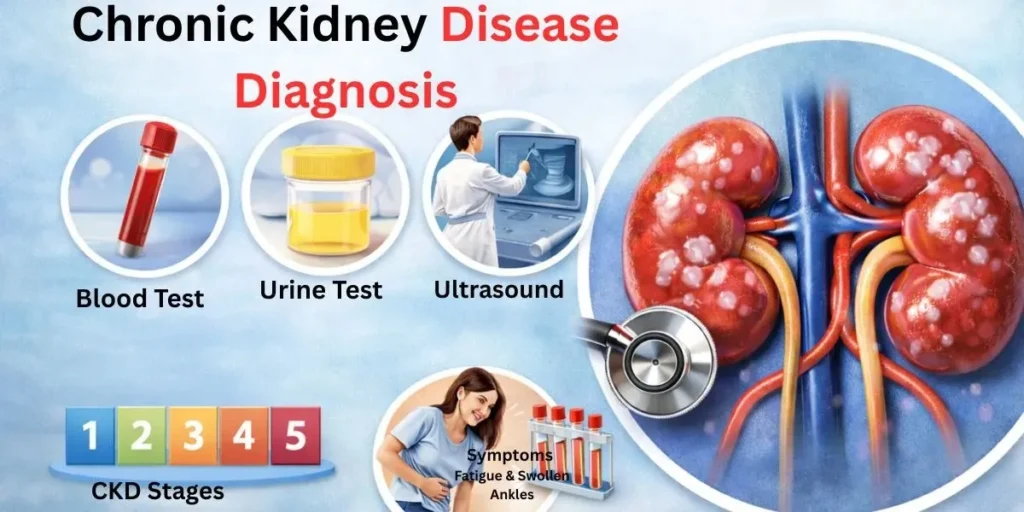
Chronic Kidney Disease Diagnosis, Stages, and Things You Should Know
Chronic Kidney Disease Diagnosis, or CKD for short, refers to a long-term medical issue during which the filtering capability of the body’s organs gradually deteriorates. Currently, CKD affects 1 in 7 people within the United States population, with many individuals unaware they are suffering from this health problem until it reaches an advanced stage within their medical situation. The diagnosis of a person suffering from CKD occupies an extremely important place when it comes to controlling its progression and development.
This article provides information regarding diagnosis, tests performed by doctors, criteria, signs, and symptoms, as well as expectations by a patient living in the USA.
What Is Chronic Kidney Disease?
Chronic Kidney Disease is an injury or disability of the kidney or loss of kidney function for more than three months. Contrary to kidney injury, CKD develops extremely slowly or even silently in its early stage. This health issue will progress to the point where the kidney will fail if it is not properly diagnosed and treated promptly.
- Some of the most common causes of CKD in America include:
- Diabetes (Type 1 and Type 2)
- High Blood Pressure-Hypert
- Heart disease
- Disorders caused by autoimmunity:
- Such medications as pain-killers taken for an extended period may end
Why Early Chronic Kidney Disease Diagnosis Matters
Early diagnosis of CKD allows doctors to:
- Slowing kidney damage by lifestyle and medical intervention
- Control underlying conditions such as diabetes and hypertension.
- Reduce the risk of cardiovascular diseases and stroke
- Delay or prevent the need for dialysis or kidney transplant
Unfortunately, many Americans do not realize they have kidney disease, as symptoms may not appear until kidney function is significantly reduced.
Symptoms That May Lead to CKD Diagnosis
In the initial stages, the disease may not manifest with noticeable symptoms; however, as the disease advances, patients may experience:
- Fatigue and Low Energy:
- Swelling in feet, ankles, and hands, or face
- Changes in urination (frequency, color, or foamy urine)
- Shortness of Breath
- Nausea or Vom
- Poor appetite
- Muscle cramps
- Trouble concentrating
In such cases, when the symptoms persist for a long time, doctors may suggest testing for chronic kidney disease.
Tests Used for Chronic Kidney Disease Diagnosis
1. Blood Tests (Serum Creatinine and eGFR
The most important blood test for CKD diagnosis measures creatinine, which is a waste product removed by the kidneys. Using results of the creatinine test, a doctor computes the estimated Glomerular Filtration Rate.
- eGFR shows how well the kidneys filter blood
- Normal eGFR values are typically above 90 mL/min/1.73
- An eGFR level persistently low over a period of time greater than 3 months indicates the
In addition, in the USA, eGFR is the standard biomarker used in diagnosing and staging CKD.
2. Urine Tests (Albumin and Protein)
In urine tests, abnormal levels of protein, or albumin, are detected in the urine, a condition referred to as albuminuria or proteinuria.
Some common urine tests include:
- Urine Albumin-to-Creatinine
- Routine urinalysis
The role of a normal kidney is to keep protein from leaking into your urine. However, if your urine contains a high amount of protein, this is a sure sign that your kidneys have been
3. Imaging Tests
Imaging procedures help doctors evaluate the shape and size of kidneys. It may include:
- Ultrasound
- CT scan
- MRI
These tests can help diagnose kidney stones, cysts, tumors, and abnormalities responsible for CKD.
4. Kidney Biopsy (In Some Cases)
In a kidney biopsy, a sample of tissue is removed for analysis. Although this may not be necessary for all patients, for some patients, it is advisable.
- The cause of CKD is unknown
- Autoimmune or inflammatory kidney disease suspected
- Rapid decline in kidney function
Chronic Kidney Disease Stages Explained
CKD is classified into five stages based on eGFR levels:
Stage 1
- eGFR ≥ 90
- Kidney damage present, but function is normal
- Often diagnosed through urine tests
Stage 2
- eGFR 60–89
- Mild loss of kidney function
- Usually asymptomatic
Stage 3 (3a and 3b)
- eGFR 30–59
- Moderate kidney damage
- Symptoms may begin to appear
Stage 4
- eGFR 15–29
- Severe kidney damage
- Close monitoring and treatment planning needed
Stage 5 (Kidney Failure)
- eGFR < 15
- Dialysis or kidney transplant may be required
Correct staging is a key part of chronic kidney disease diagnosis and treatment planning.
Who Should Get Tested for CKD in the USA?
Doctors recommend routine kidney screening tests for anyone at higher risk, which includes:
- Adults with Diabetes or High Blood Pressure
- Those with a family background of kidney disease
- Individuals over the age of 60 years
- African Americans, Hispanics, and Native Americans (Higher Risk Groups)
- Long-term users of NSAIDs or pain medicines
- Regular testing helps identify CKD at an early stage, before symptoms start.
How Often Should CKD Tests Be Done?
- High-risk individuals: at least once a year
- Diagnosed CKD patients: frequency depends on stage and severity
- Advanced stages: tests may be required every 1–3 months
Your healthcare provider will determine the right testing schedule.
What to Do After a Chronic Kidney Disease Diagnosis
After diagnosis, treatment focuses on slowing disease progression:
- Managing blood pressure and blood sugar
- Following a kidney-friendly diet
- Avoiding nephrotoxic medications
- Staying hydrated as advised
- Regular monitoring of kidney function
In some cases, patients explore complementary approaches alongside medical care, but these should always be discussed with a healthcare professional.
Conclusion
Diagnosis of Chronic Kidney Disease is not performed by a single test; rather, it is done based on a series of tests, including blood and urine tests and imaging studies, which are followed by clinical assessment. Early detection in high-risk populations is a must, especially for people living in the US. Since many people are at a high risk of developing CKD, it is possible for them to have a long, healthy life if they can make wise health decisions in the early stage of CKD.