
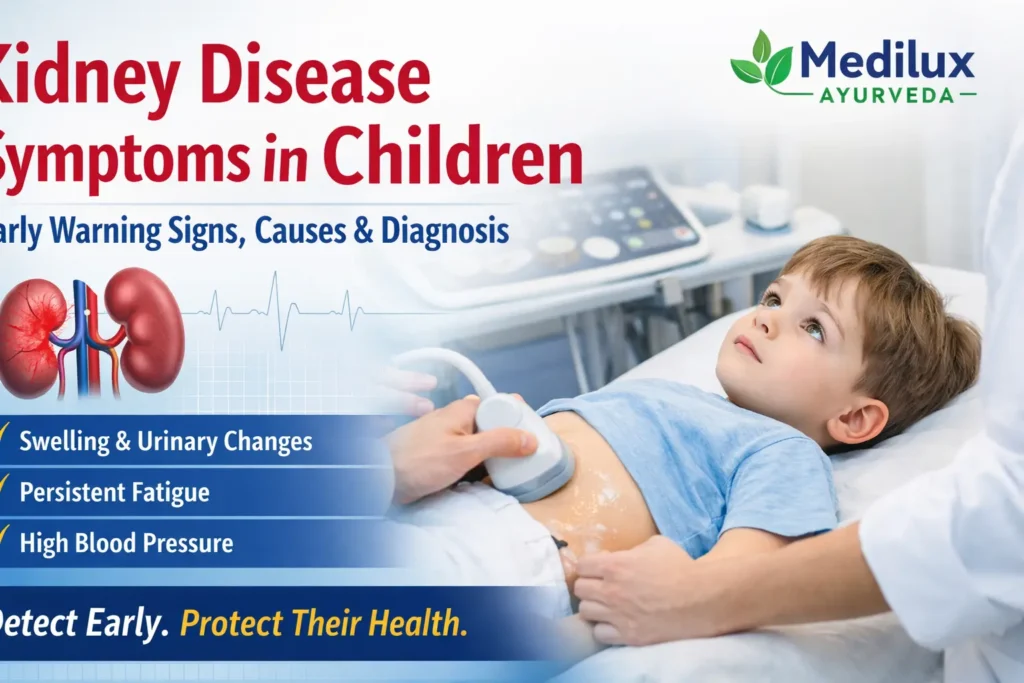
Kidney Disease Symptoms in Children – Early Warning Signs, Causes & Diagnosis Explained
Kidney disease is considered a concern for adults, but Kidney Disease Symptoms in Children are more common than most parents realize. The significance of early diagnosis cannot be emphasized enough because kidney disease can affect a child’s growth and development if it is not treated.
The kidneys of children have many important functions, such as the filtration of waste products, fluid balance, blood pressure regulation, and electrolyte balance. The body will show symptoms if the kidneys are not working properly, some of which are not serious while others are understanding the early Kidney Disease Symptoms in Children can help parents take quick action and seek timely medical care.
What is Kidney Disease in Children?
Kidney disease in children is a condition where the kidneys are not functioning properly. This can happen suddenly or over a period of time .
The kidneys have the following functions:
- Removing toxins from the blood
- Regulating fluid balance
- Regulating blood pressure
- Helping with bone health
- Producing red blood cells
When the kidneys are not functioning properly, toxins will build up in the body, causing symptoms.
Early Kidney Disease Symptoms in Children (Powerful Warning Signs)
Early Kidney Disease Symptoms in Children can be a lifesaver.
1. Swelling (Edema)
The most common symptom is swelling in and around:
- Eyes (especially in the morning)
- Feet and ankles
- Hands
- Abdomen
The swelling is due to the kidneys’ inability to flush out the fluid.
2. Changes in Urination
Urinary changes are a major red flag.Watch for:
- Decreased urination
- Increased urination at night
- Painful urination
- Blood in urine
- Foamy urine (protein leakage)
Foamy urine is often linked to protein loss, which can indicate kidney damage.
3. Fatigue and Weakness
Kids with kidney disease can look like they have:
- Constant fatigue
- Lack of energy
- Less active than usual
This is because of anemia and the buildup of toxins in the blood.
4. Poor Growth and Development
Kidney disease can impact:
- Height
- Weight
- Puberty
If your kid is not growing normally, a test of kidney function may be required.
5. Loss of Appetite & Nausea
Kidney problems may lead to:
- Loss of appetite
- Nausea
- Taste of metal in the mouth
This is because of the toxin buildup in the body.
6. High Blood Pressure
The kidneys are also important in the regulation of blood pressure. Uncontrolled high blood pressure in children can be a sign of kidney problems.
7. Pale Skin & Anemia :
The kidneys also make a hormone called erythropoietin, which stimulates the production of red blood cells. If the kidneys are injured, anemia can occur, leading to:
- Pale skin
- Dizziness
- Shortness of breath
Major Causes of Kidney Disease in Children
Knowledge of the causes enables parents to recognize the risk factors in children early.
1. Congenital Kidney Abnormalities
Some children are born with congenital abnormalities of the kidneys. These include:
- Small kidneys
- Obstruction of the urinary tract
- Abnormal development of the kidneys
These abnormalities are usually identified in infancy.
2. Urinary Tract Infections (UTIs)
UTIs in children can cause damage to the kidneys if recurrent or left untreated.
The warning signs of UTIs in children are:
- Fever
- Painful urination
- Irritability (in infants)
3. Nephrotic Syndrome
This is a common kidney problem in children characterized by:
- Severe swelling
- Presence of protein in the urine
- Low blood protein levels
4. Genetic Disorders
Certain genetic disorders like polycystic kidney disease can cause the kidneys to fail.
5. Autoimmune Diseases
Conditions like lupus can cause inflammation of the kidneys.
6. Acute Kidney Injury
This is a sudden injury that can be caused by:
- Dehydration
- Infections
- Certain medications
- Trauma
Early treatment can reverse the damage.
How Kidney Disease in Children is Diagnosed
Early diagnosis is very effective and can help avoid complications.
1. Urine Tests
A urine test can help identify the presence of:
- Protein
- Blood
- Infection
- Abnormal sediment
2. Blood Tests
Doctors check the levels of:
- Creatinine
- Blood urea nitrogen (BUN)
- Electrolytes
3. Blood Pressure Monitoring
High blood pressure can be an indicator of kidney problems.
4. Ultrasound Imaging
Ultrasound imaging is a safe and non-invasive procedure used to evaluate:
- Kidney size
- Obstructions
- Abnormalities
It is a widely used modality in the USA and UK healthcare systems for pediatric patients.
5. Kidney Biopsy (If Required)
In some cases, a biopsy may be required to identify the type of kidney problem.
When should Parents See a Doctor?
Seek immediate medical attention if your child has:
- Persistent swelling
- Blood in urine
- Severe fatigue
- Unexplained high blood pressure
- Very little urination
Early intervention significantly improves long-term outcomes.
Complications of Untreated Kidney Disease in Children .
If left untreated, kidney disease can cause complications such as:
- Chronic kidney disease (CKD)
- Kidney failure
- Growth retardation
- Weakened bones
- Heart conditions
Prevention & Early Protection Tips
Although not all kidney ailments can be prevented, there are ways for parents to protect their children from kidney problems by:
- Encouraging adequate hydration
- Treating urinary infections early
- Monitoring blood pressure
- Providing balanced nutrition
- Avoiding unnecessary medications
Regular pediatric checkups are highly essential for early detection.
Final Thoughts: Why Early Detection is Life-Changing
Finding Kidney Disease Symptoms in Children is highly relevant for protecting your child’s health. The earlier kidney problems are detected, the more successful their treatment will be.
As a parent, you should never ignore symptoms like swelling, urinary problems, or unusual fatigue. Modern technology has made it easier than ever to ensure early detection is simpler and more accurate than ever before.
Kidney disease in children can be a serious problem – but with early detection, accurate diagnosis, and proper treatment, children can lead healthy and active lives.
If you or your child are experiencing any of the symptoms mentioned above, consult a pediatric specialist immediately.
How Medilux ayurveda can help you with your kidney disease?
At “Medilux Ayurveda” we offer personalized treatment for kidney patients, including tailored diet plans and lifestyle modifications. Regardless of whether you are in stage 1 through stage 5 of kidney disease or are currently on dialysis, we are available to assist you 24×7.
If you’re experiencing persistent foamy urine due to kidney concerns, Kaknee Kidney Care Medicine at Medilux Ayurveda is designed to support kidney function naturally, help reduce excess protein loss in urine, and promote overall renal health through carefully selected Ayurvedic herbs and personalized guidance.
To begin your holistic treatment, get in touch with us at “Medilux Ayurveda” for a complimentary doctor consultation. Please complete the patient form and submit it with basic information about your condition, and our certified team will contact you as soon as possible. Alternatively, you can also reach our team via phone or live chat.