

Foamy urine can be alarming, especially if you see bubbles forming in the toilet bowl on a regular basis. While occasional foamy or bubbly urine is usually not a problem, regular foam could be a sign of an underlying health issue, such as early-stage kidney disease.
Thank you for reading this post, don't forget to subscribe!Chronic kidney disease (CKD) affects millions of adults in the United States and the United Kingdom, and one of the first symptoms of CKD is often protein in the urine.
In this comprehensive guide, we will discuss what foamy urine is, its causes, symptoms, treatments, and when to seek medical attention in a straightforward and easy-to-understand manner.
What Is Foamy Urine?
Foamy urine is the urine that looks bubbly, frothy, or sudsy after urination. Small bubbles that quickly disappear are usually normal. But if the foam is thick and persistent or if it occurs frequently, it could be an indication of too much protein in the urine (proteinuria), which may be a sign of kidney issues.
It is crucial to understand the difference between harmless foam and foamy urine to ensure your kidney health is protected.
Causes of Foamy Urine
Foamy urine can be caused by a number of factors. Some of these factors are harmless and temporary, while others can be symptoms of certain medical conditions.
1. Fast Urine Stream
A fast urine stream is one of the most common harmless causes of foamy urine. This is because when urine splashes into the toilet bowl, it creates a lot of bubbles. This is similar to water splashing into a sink. The bubbles formed by foamy urine usually clear up in a few minutes.
This type of foamy urine is not associated with kidney problems and usually occurs when the bladder is full. If the foamy urine clears up in a short while and is not present every time, then there is no need to worry about it.
2. Dehydration
Dehydration can cause the urine to become more concentrated. This is because when a person does not drink enough water, the urine becomes darker and more concentrated. As a result, the urine may appear foamy.
Other symptoms of dehydration include dry mouth, tiredness, headache, and dark yellow urine. Drinking plenty of water usually cures this condition quickly. Mild dehydration is quite common and is not a serious condition if treated in time.
3. Protein in Urine (Proteinuria)
Proteinuria is among the most significant medical conditions that lead to foamy urine. In healthy kidneys, waste is filtered out, and necessary proteins are retained in the bloodstream. However, when the filtering units of the kidneys (glomeruli) are damaged, proteins can spill into the urine.
When excess proteins spill into the urine, they give it a foamy or frothy appearance due to the effect of proteins on the surface tension of the urine.
Persistent proteinuria may indicate:
- Chronic kidney disease (CKD)
- Glomerulonephritis
- Diabetic kidney disease
High blood pressure–related kidney damage
When foamy urine persists and does not go away, a urine test should be done to test for protein.
4. Diabetes
Diabetes is among the most significant causes of kidney damage globally. High blood sugar concentrations can damage the filtering units of the kidneys over time, resulting in protein spilling into the urine.
When a diabetic patient experiences persistent foamy urine, it may be a sign of early diabetic kidney disease.
5. High Blood Pressure
Uncontrolled high blood pressure can harm blood vessels in the kidneys. Weakened blood vessels in the kidneys can cause protein leakage into urine.
Foamy urine in a hypertensive patient should not be overlooked. Blood pressure management is essential in halting the progression of kidney damage.
6. Urinary Tract Infection (UTI)
Urinary tract infection can sometimes cause foamy or cloudy urine. This occurs because of the presence of bacteria, white blood cells, or pus in the urine.
Foamy urine in a UTI patient is often accompanied by symptoms such as painful urination, frequent urination, lower abdominal pain, or pungent-smelling urine.
7. Kidney Disease
Chronic kidney disease (CKD) can cause chronic protein leakage, resulting in chronic foamy urine. In its early stages, CKD may not be accompanied by pain or symptoms.
Foamy urine can be the first symptom of kidney damage. Early diagnosis through urine and blood tests can greatly halt the progression of the disease.
Symptoms Associated with Foamy Urine
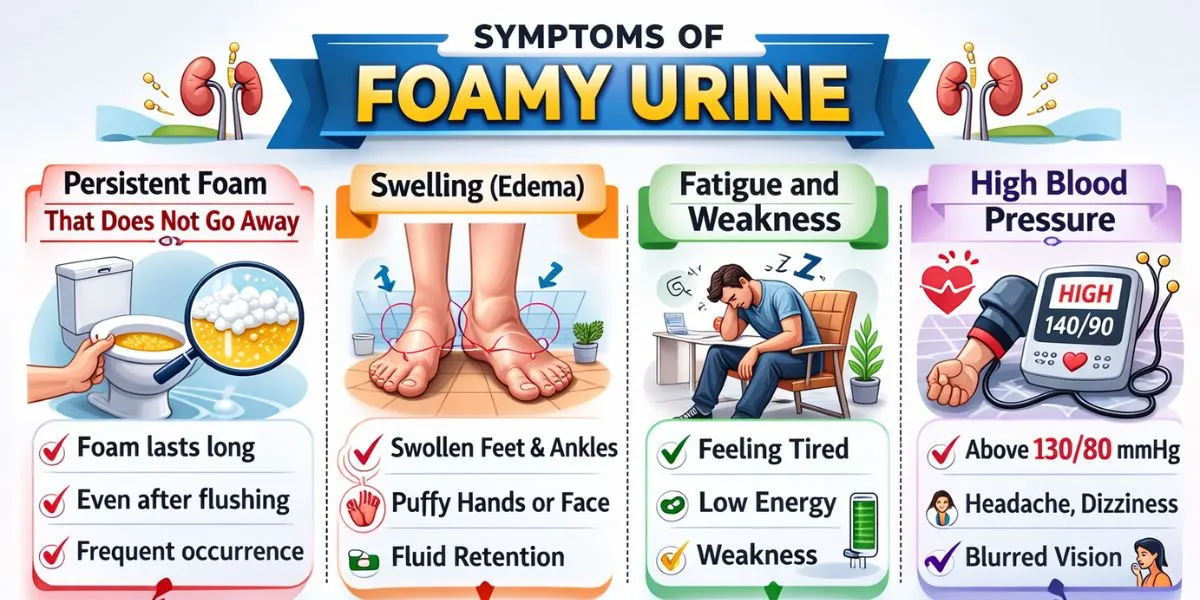
Foamy urine is a visible symptom by itself. But when it is associated with a medical condition, other symptoms may arise.
1. Persistent Foam That Does Not Go Away
When the foam stays on top of the urine for a few minutes and is a regular occurrence, it may be a sign of protein in the urine instead of just splashing.
Persistent foam is one of the most important warning signs that a doctor visit may be required.
2. Swelling (Edema)
Swelling of the feet, ankles, hands, or face may occur when the body loses protein in the urine. When the blood has low protein, fluid leaks into tissues.
When there is foamy urine and swelling, it is a definite sign of kidney problems and needs to be tested immediately.
3. Fatigue and Weakness
Kidney problems can cause fatigue because of the buildup of toxins or anemia. If foamy urine is accompanied by strange feelings of fatigue, it may be a sign of a problem with the kidneys.
4. High Blood Pressure
Kidney problems and high blood pressure are related to each other. If you find that your urine is foamy and your blood pressure is high, then you should check this symptom as well.
5. Changes in Urine Color or Clarity
Cloudy urine, dark urine, or urine with blood in it can also be a symptom of foamy urine when the urine is infected or when the kidneys are affected.
If your urine looks different and the change is persistent, then you should talk to your doctor about it.
6. Increased Urination or Burning Sensation
These symptoms are more likely to happen in urinary tract infections. If your urine is foamy and you are also experiencing discomfort, then it can be an infection.
How Is Foamy Urine Diagnosed?
Diagnosis typically includes:
- Urine dipstick test (to check protein)
- Urine protein-to-creatinine ratio
- Blood tests to measure kidney function (eGFR)
- Blood pressure measurement
- Blood sugar testing
Early detection allows better treatment outcomes.
Treatments for Foamy Urine
Treatment varies depending on the underlying cause.
1. Increasing Hydration
Dehydration is the underlying cause in some cases. Drinking sufficient amounts of water helps decrease the concentration and foam of the urine.
Drink enough water to stay hydrated unless fluid intake is restricted by your doctor.
2. Managing Blood Pressure
Managing high blood pressure helps maintain kidney function. Lifestyle changes and medications can help decrease protein leakage in the urine.
3. Controlling Blood Sugar
In diabetic patients, regulating blood sugar levels helps maintain kidney function and prevents further damage.
4. Treating Infections
In cases where a urinary tract infection is the cause, antibiotics are usually prescribed. Symptoms should resolve within a few days.
5. Kidney Disease Management
In cases where chronic kidney disease is diagnosed, management of the condition can include the following:
- Managing blood pressure
- Dietary changes
- Managing protein intake
- Medications to decrease proteinuria
- Monitoring kidney function regularly
Early treatment can help slow progression significantly.
6. Lifestyle Improvements
Lifestyle changes can help decrease the chances of kidney-related foamy urine:
- Maintain a healthy weight
- Exercise regularly
- Reduce salt intake
- Quit smoking
- Follow a kidney-friendly diet if recommended
How to Reduce the Risk of Foamy Urine
To ensure kidney health:
- Hydrate
- Regulate blood pressure
- Regulate diabetes
- Avoid smoking
- Excessive salt intake
- Maintain ideal weight
- Annual kidney check-ups if at risk
Regular check-ups are especially important for individuals aged 40 and above in the US and UK.
Does Foamy Urine Always Mean Kidney Disease?
No. Occasional foamy urine may be harmless and due to urine flow or mild dehydration.
However, if you notice persistent foamy urine, do not take it lightly, especially if you have diabetes, high blood pressure, or a family history of kidney problems.
It is easy to test and gives you peace of mind.
When Should You See a Doctor?
If you notice the following:
- Foamy urine occurs daily
- The foam does not go away
- Swelling occurs
- You have diabetes or high blood pressure
- You see blood in urine
- You experience persistent fatigue
A simple urine test can detect protein levels and identify potential problems early.
Final Thoughts
Foamy urine is very common and usually harmless, especially when it is due to rapid urination or mild dehydration. Yet, it may be a sign of protein in the urine and early kidney issues if foamy urine persists.
In the USA and the UK, early diagnosis by simple urine and blood tests can help prevent complications in the long term.
If you are worried about foamy urine, you should discuss it with your GP or primary care physician.
Your kidneys are very important for your overall health, and early intervention helps.
How Medilux ayurveda can help you with your kidney disease?
At “Medilux Ayurveda” we offer personalized treatment for kidney patients, including tailored diet plans and lifestyle modifications. Regardless of whether you are in stage 1 through stage 5 of kidney disease or are currently on dialysis, we are available to assist you 24×7.
To begin your holistic treatment, get in touch with us at “Medilux Ayurveda” for a complimentary doctor consultation. Please complete the patient form and submit it with basic information about your condition, and our certified team will contact you as soon as possible. Alternatively, you can also reach our team via phone or live chat.