

If you have noticed lately that there are bubbles or foam in the toilet after urination, you might be wondering: Why is my urine foamy? In most cases, foamy urine is not a reason to worry about. It can happen if you urinate quickly, are slightly dehydrated, or if there are detergents in the toilet water.
Thank you for reading this post, don't forget to subscribe!If the foamy urine continues, it might, in some cases, be an indication of protein in the urine, which can be an early sign of kidney problems. It is crucial to know the difference between normal foam and a medical concern to make sure your health is not at risk.
This article will cover the most common reasons, symptoms, and when to see a doctor in the US or UK.
Quick Answer: Why Is My Urine Foamy?
Foamy urine is usually as a result of urinating too quickly or as a result of dehydration, which leads to concentrated urine. But if the foamy urine is a regular thing, it may go for a few days, and it is accompanied by swelling, fatigue, and hypertension, then it might be a sign of protein in the urine, which may be an indication of kidney problems.
What Does Foamy Urine Look Like?
Foamy urine will normally have the following characteristics:
- A layer of small bubbles on the surface
- The foam is white or light in color
- The bubbles stick around for several minutes
Sometimes, bubbles that quickly disappear are normal.
Common Causes of Foamy Urine
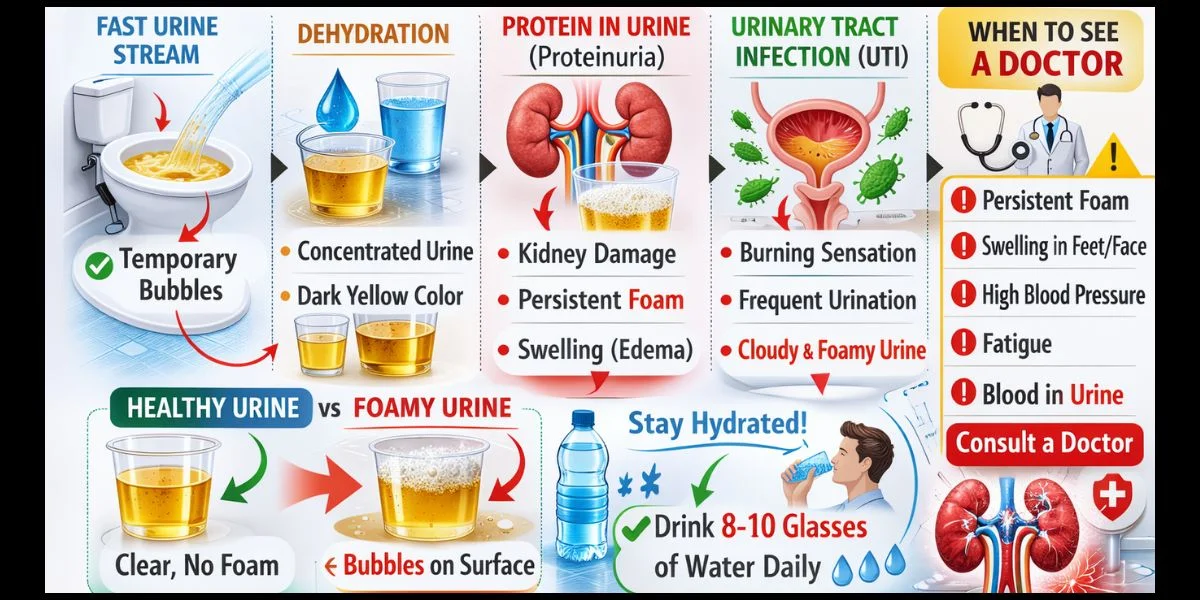
1. Urinating Quickly
A strong stream of urine may form temporary bubbles. Just as water sprayed strongly into a sink, a strong stream of urine may form foam. If the bubbles go away quickly, this is not a problem.
2. Dehydration
If you do not drink enough fluids, your urine will be more concentrated. Concentrated urine tends to form foam.
Symptoms of dehydration include:
- Dark yellow urine
- Dry mouth
- Headache
- Dizziness
Increasing fluid intake usually clears up the problem in a day.
3. Protein in the Urine (Proteinuria)
One of the most significant medical reasons for persistent foamy urine is the presence of protein in the urine.
Normal kidneys filter out waste while retaining protein in the bloodstream. Damaged filters (glomeruli) allow protein to leak into the urine, forming foam.
Proteinuria is associated with:
- Diabetes
- Hypertension
- Kidney disease
- Autoimmune disorders
The National Kidney Foundation reports that the presence of protein in the urine for a prolonged period of time is an early indicator of kidney damage.
Likewise, the NHS recommends testing if foamy urine persists or is accompanied by other symptoms.
4. Kidney Disease
Chronic kidney disease (CKD) can be a gradual process and may not produce symptoms in the early stages. Foamy urine could be one of the early symptoms of CKD.
Risk factors for CKD are:
- Diabetes
- Hypertension
- Coronary heart disease
- Family history of kidney disease
- Age > 60 years
According to the Centers for Disease Control and Prevention, many people with early stages of kidney disease are unaware of their condition.
5. Urinary Tract Infection (UTI)
Urinary tract infections can sometimes be the cause of cloudy or foamy urine, especially when there is pus or protein in the urine.
Other symptoms of UTI include:
- Burning sensation while urinating
- Frequent urination
- Pain in the lower abdomen
- Fever (in severe infections)
6. Cleaning Chemicals in Toilet Water
Foamy urine may not even be your urine. Cleaning agents used in toilets can cause urine to foam. If foamy urine is only present in specific toilets, this could be the reason.
What Is Protein in the Urine (Proteinuria)?
Proteinuria is the leakage of excess protein from the blood into the urine.
Normally:
- The kidneys filter waste products
- The proteins are retained in the blood
- The urine is free of proteins
Damaged filters in the kidneys allow proteins like albumin to leak into the urine. This results in the formation of foam resembling soap bubbles.
Proteinuria can be caused by:
- Chronic kidney disease (CKD)
- Diabetes
- Hypertension
- Glomerulonephritis
- Kidney infections
- Autoimmune disorders
Can Foamy Urine Be an Early Sign of Kidney Disease?
Yes, in some instances.
Chronic kidney disease can be a gradual process and, in some cases, may not be accompanied by pain in the early stages. Foamy urine, which results from the leakage of protein, may in some instances be one of the first symptoms noticed.
Other symptoms of kidney disease that may be experienced in the early stages include the following:
- Swelling in the feet or ankles
- Swelling around the eyes
- Fatigue
- High blood pressure
- Changes in urine output
- Blood in the urine
In the event that foamy urine is accompanied by the above symptoms, it is advisable to seek medical attention.
Diabetes and Foamy Urine
Diabetes is one of the leading causes of kidney problems in the United States and the United Kingdom.
High sugar levels in the blood can damage the filtering system of the kidneys over time, leading to diabetic nephropathy. In most cases, the symptoms of the condition include protein in the urine.
In the case where you have diabetes and notice that your urine is foamy, it is important to undertake a urine test.
High Blood Pressure and Kidney Damage
High blood pressure can damage the small blood vessels of the kidneys if it is not controlled.
Over time, this can lead to the leakage of protein into the urine, resulting in foam. It is important to control blood pressure in order to maintain healthy kidneys.
Why Is My Urine Foamy but I Have No Pain?
Kidney problems do not cause pain in the early stages.
Unlike infections and kidney stones, chronic kidney disease is painless. This is why it is important not to ignore foamy urine even if it is not accompanied by pain.
How Is Foamy Urine Diagnosed?
Doctors perform simple tests to determine the cause.
Urine Dipstick Test
This test helps to identify the presence of protein in the urine.
Urine Albumin-to-Creatinine Ratio (ACR)
This test measures the amount of albumin in your urine compared to the level of creatinine. This test is often used to check for early signs of kidney damage.
Blood Tests
Blood tests measure:
- Creatinine levels
- Estimated Glomerular Filtration Rate (eGFR)
- Electrolyte balance
Imaging Tests
In some instances, ultrasound imaging may be employed to assess the structure of the kidneys.
Lifestyle Changes to Support Kidney Health
Although foamy urine is not yet associated with kidney disease, it is still important to keep a healthy lifestyle to ensure that the kidneys remain healthy.
- Stay hydrated
- Control blood pressure
- Carefully manage diabetes
- Limit salt intake
- Exercise regularly
- Avoid smoking
- Avoid NSAID pain relievers unless necessary
Prevention is always better than treatment.
Is Foamy Urine Always Serious?
No.
Foamy urine is common and often harmless. Many people experience it occasionally due to normal variations in urine flow or hydration.
The key difference is persistence.
Temporary foam = usually harmless.
Persistent foam with other symptoms = requires medical evaluation.
When Should You See a Doctor?
Foam that goes away in a short period of time is not a problem. However, you should seek the advice of a doctor if:
- Foamy urine persists for several days
- Foam is present every time
- You observe swelling in the legs, hands, and face
- You feel weak and tired
- You have high blood pressure
- You have diabetes
- You see blood in your urine
- You have pain while urinating
Early testing can prevent serious complications.
Final Thoughts
If you are asking, “Why is my urine foamy?” the answer depends on the frequency of the foamy urine and other symptoms.
Foamy urine occasionally is not a problem and is due to urinating too quickly or dehydration. Foamy urine constantly may be a sign of protein leakage, which is a precursor to kidney disease.
The best course of action is to monitor your symptoms and consult a doctor if the foamy urine continues. Early treatment of kidney problems can greatly improve outcomes in the US and UK healthcare systems.
Your urine may hold the key to your health. Monitoring changes without freaking out is the best way to keep your kidneys healthy.
How Medilux ayurveda can help you with your kidney disease?
At “Medilux Ayurveda” we offer personalized treatment for kidney patients, including tailored diet plans and lifestyle modifications. Regardless of whether you are in stage 1 through stage 5 of kidney disease or are currently on dialysis, we are available to assist you 24×7.
To begin your holistic treatment, get in touch with us at “Medilux Ayurveda” for a complimentary doctor consultation. Please complete the patient form and submit it with basic information about your condition, and our certified team will contact you as soon as possible. Alternatively, you can also reach our team via phone or live chat.