
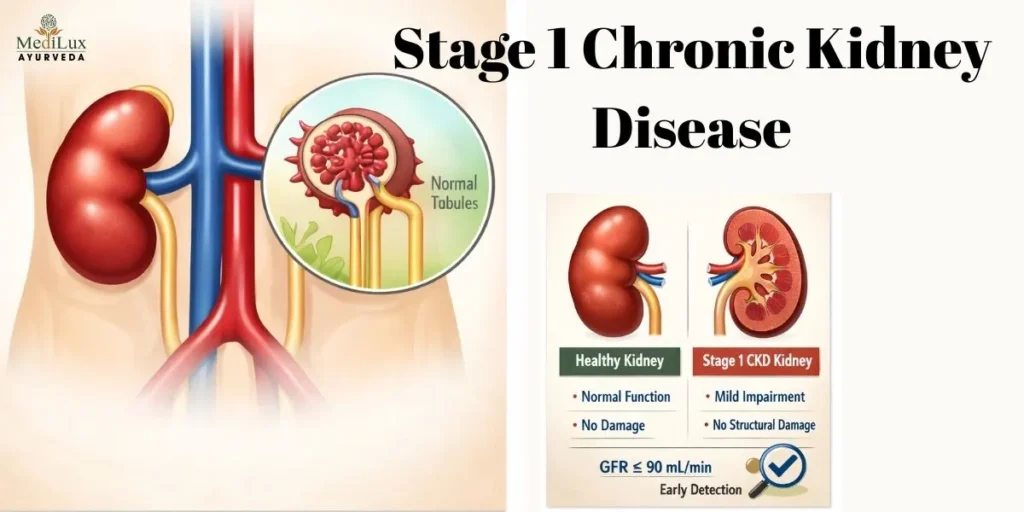
Stage 1 Chronic Kidney Disease (CKD) is the first stage of kidney damage—and perhaps the most confusing. Many patients believe that a diagnosis of Chronic Kidney Disease automatically indicates severe kidney failure or dialysis. In fact, Stage 1 CKD is a mild and easily treated condition when caught early.
In major cities such as New York City, Los Angeles, Chicago, Houston, London, and Birmingham, routine health screenings are uncovering more patients with early-stage kidney disease than ever before.
The good news? Stage 1 CKD offers a vital chance to halt its progression.
This in-depth guide covers everything you need to know, from symptoms and causes to treatment, diet, and prognosis.
What Is Stage 1 Chronic Kidney Disease?
Stage 1 CKD is characterized by:
- Normal or elevated eGFR (90 or higher)
- Evidence of kidney damage for at least 3 months
Glomerular filtration rate (eGFR) is a measure of how effectively your kidneys filter waste products from your blood. In Stage 1, the filtration rate is excellent, but the presence of protein in the urine (albuminuria), abnormalities, or changes suggest early kidney damage.
In large medical institutions, such as those in California, Taxes, London, and Manchester, physicians will tell you that Stage 1 is a warning stage, not kidney failure.
Early detection is a potent tool for prevention.
Why Early Detection Matters
Kidney disease is also known as a “silent disease” because its symptoms are not visible until the later stages. By the time the symptoms are noticed, the kidney function may already be compromised.
Stage 1 CKD presents a special opportunity:
- Kidney function is not compromised yet
- The damage can be reversed in some instances
- The progression of the disease can be halted or slowed down
- Changes in lifestyle can be highly effective
Early action dramatically improves long-term kidney health outcomes.
Is Stage 1 CKD Serious?
Stage 1 Chronic Kidney Disease is not seen as a severe stage since the kidney function is normal. But it is a sign that early damage to the kidneys has occurred. Even though it may not cause any symptoms or need intense treatment, it is a serious stage that needs attention to prevent it from worsening. With proper medical attention and healthy lifestyle changes, most people can control Stage 1 CKD effectively.
What Causes Stage 1 Chronic Kidney Disease?
There are a number of medical conditions that can cause early kidney problems.
Common Causes Include:
- Type 2 diabetes
- High blood pressure (hypertension)
- Family history of kidney problems
- Autoimmune diseases
- Recurring kidney infections
- Congenital problems with the kidneys
- Long-term use of certain medications
In the US and the UK, diabetes and high blood pressure are still the main causes of early kidney problems.
Controlling these conditions is the most effective way to protect kidney function.
Symptoms of Stage 1 Chronic Kidney Disease
In Stage 1 CKD, most patients do not experience any symptoms.
This is why Stage 1 Chronic Kidney Disease is often found through:
- Routine blood work
- Urine tests
- Annual health checks
In some instances, patients may experience:
- Mild swelling
- Foamy urine (protein spillage)
- Slight elevation in blood pressure
Due to the lack of symptoms, it is crucial to have regular screenings.
How Is Stage 1 CKD Diagnosed?
Stage 1 CKD is diagnosed when the following conditions are met:
- eGFR is 90 or higher
- Kidney damage is present for 3 months or longer
The following tests are used to diagnose Stage 1 Chronic Kidney Disease:
- Blood tests (creatinine and eGFR)
- Urine tests (protein/albumin excretion)
- Imaging studies (ultrasound and CT scan)
- Blood pressure measurement
To be sure that the patient has CKD, kidney damage must be chronic, not acute.
Treatment for Stage 1 Chronic Kidney Disease
There is no “quick fix” at this point, but the goal of treatment is to prevent progression. The goal of treatment is to prevent further kidney damage and preserve kidney function.
1. Manage Blood Pressure
High blood pressure causes injury to small blood vessels in the kidneys.
The following are recommended:
- Maintain a blood pressure level of less than 130/80 mmHg
- Limit salt intake
- Take prescribed medications (ACE inhibitors or ARBs)
- Maintain a healthy weight
Controlling blood pressure is one of the most effective ways to protect against progression.
2. Manage Blood Sugar
If a person has diabetes, it is crucial to maintain tight blood sugar control.
The following are recommended:
- Monitor blood sugar levels regularly
- Follow a diabetic diet plan
- Take prescribed medications regularly
- Exercise regularly
Maintaining normal blood sugar levels helps to decrease the workload on the kidneys.
3. Follow a Kidney-Friendly Diet
In Stage 1, it is rarely necessary to follow a very restrictive diet. However, it is essential to eat well.
Focus On:
- Fresh fruits and vegetables
- Whole grains
- Lean protein sources
- Low sodium intake
- Adequate hydration
Limit:
- Processed foods
- High salt intake
- Sugary drinks
- Processed meats
Note: In contrast to the more advanced stages of CKD, it is not necessary to restrict potassium and phosphorus unless blood tests show an imbalance.
4. Exercise Regularly
Regular exercise is beneficial for your kidneys in the following ways:
- Improving blood flow
- Reducing inflammation
- Promoting heart health
- Managing weight
- Lowering blood pressure
Aim to exercise for 30 minutes, at least five days a week.
Walking, swimming, and cycling are great options.
5. Avoid Kidney Stressors
To protect your kidneys, it is important to avoid exposure to damaging agents.
Avoid:
- Overuse of NSAIDs (ibuprofen, naproxen)
- Smoking
- Excessive alcohol consumption
- Unproven herbal supplements
Always consult your healthcare provider before starting any supplement.
Can Stage 1 CKD Be Reversed?
In some instances, the early kidney injury can be alleviated if the cause is addressed promptly.
For instance:
- Better control of blood sugar may lower the amount of protein in the urine.
- Controlling high blood pressure may slow the rate of kidney filtration.
- Clearing infections may halt the injury.
However, not all injuries can be reversed. The main aim is to halt the progression to Stage 2 or later.
Life Expectancy with Stage 1 CKD
Stage 1 Chronic Kidney Disease does not affect life expectancy if it is well managed.
Factors that influence long-term outcomes include:
- Controlling blood pressure
- Managing blood sugar
- Maintaining heart health
- Lifestyle factors
- Following up with a doctor regularly
The sooner the treatment is started, the better the outcome.
When Should You See a Nephrologist?
Referral to a kidney specialist may be advised if:
- Protein in urine rises
- eGFR starts to fall
- Blood pressure becomes hard to manage
- Underlying conditions worsen
Early referral to a specialist usually leads to better long-term kidney protection.
Emotional Impact of Diagnosis
A diagnosis of chronic kidney disease, even Stage 1, can be frightening.
Remember this:
- Stage 1 is the earliest stage of kidney disease
- Kidney function is normal
- Dialysis is not needed
- You have time to take action
Rather than being frightened, you can focus on prevention and management.
Final Thoughts: Early Action Makes the Difference
Stage 1 Chronic Kidney Disease is not kidney failure. It is an early warning sign that your kidneys need protection.
If you are a resident of the United States or the United Kingdom and have been diagnosed with Stage 1 CKD, the most important thing is:
- Monitor regularly
- Control blood pressure and blood sugar
- Follow a kidney-friendly diet
- Stay physically active
- Avoid harmful habits
Your kidneys are still functioning well. With proactive care and consistent management, you can protect them and maintain long-term health.
Early awareness is not a setback—it’s an opportunity to safeguard your future.
Book your online consultation today with Medilux Ayurveda and discover personalized Ayurvedic treatment for kidney disease designed to support natural healing and long-term kidney health. We provide expert Ayurveda care for everyone, serving patients in every city across the United States and the United Kingdom through convenient online consultations.