
If you’ve been told that you have Stage 3b Chronic Kidney Disease or CKD, you’re likely feeling worried, perhaps even overwhelmed by the information. So, what does it mean? How serious is this? Do you need to go on dialysis? Can it be cured or changed somehow?
Take a deep breath.
Stage 3b chronic kidney disease, or CKD, is a moderate to advanced level of kidney impairment, and it needs medical monitoring and lifestyle changes. If you or your loved ones have been diagnosed with stage 3b chronic kidney disease, knowing what it means, how serious it is, and how you can help your loved ones can assist you in managing your condition properly.
This guide will outline the eGFR level, symptoms, causes, treatments, diet, and supportive care for patients in the United States and the United Kingdom.
What Is Stage 3b Chronic Kidney Disease?
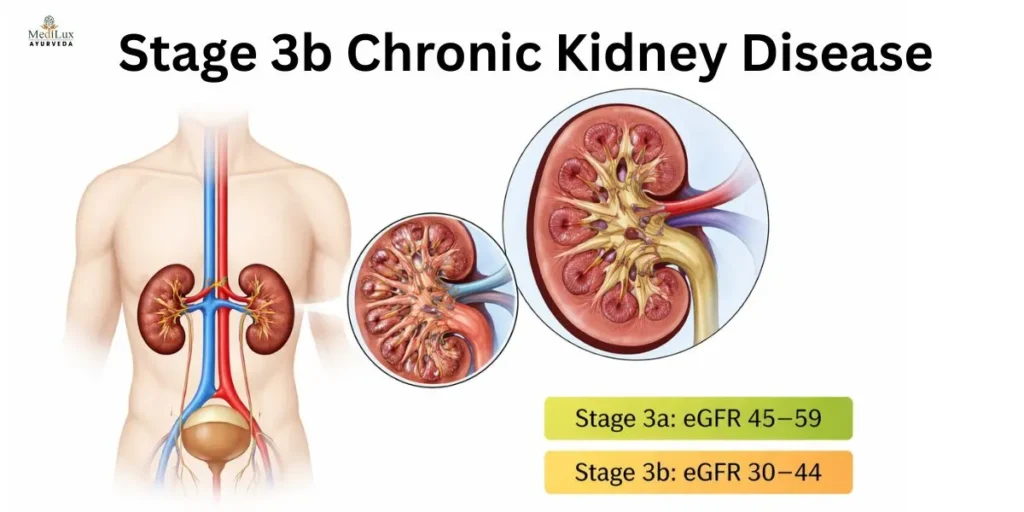
Stage 3b chronic kidney disease has an estimated glomerular filtration rate ranging from 30 to 44 mL/min/1.73m². Estimated Glomerular Filtration Rate measures how effectively your kidneys filter blood to remove wastes and excess fluids.
CKD has five stages, and stage 3 comprises two parts:
-
Stage 3a: eGFR 45–59
-
Stage 3b: eGFR 30–44
Stage 3b indicates moderate to severe kidney damage. At this stage, complications such as anemia, high blood pressure, and bone disorders may begin to appear.
Is Stage 3b Chronic Kidney Disease Serious?
Yes, Stage 3b CKD is considered serious because kidney function is impaired. At this stage:
- Waste products can begin to accumulate in the bloodstream.
- Such problems, like anemia or bone disease, may arise
- Blood pressure may be more difficult to control
However, people in the 3B stage have been known to live for many years with proper management. The thing is early intervention.
Common Symptoms of Stage 3b Chronic Kidney Disease
Some people may never recognize the obvious signs. Others may recognize:
- Persistent fatigue
- Swelling of the feet or ankles (edema)
- High Blood Pressure
- Changes in urination frequency
- Foamy Urine or Protein
- Muscle Cramps
- Dry or Itchy Skin
- Shortness of breath
- Loss of Appetite
The symptoms may appear over a gradual course. Laboratory tests are usually how a patient is found to have stage 3b.
What Causes Stage 3b Chronic Kidney Disease?
The most common causes in both the USA and the UK include:
1. Diabetes
High blood sugar levels can harm blood vessels in the kidney.
2. High Blood Pressure
Uncontrolled hypertension puts pressure on the human kidneys’ filtration units
3. Glomerulonephritis
Inflammation of the kidney filtering tissues.
4. Polycystic Kidney Disease
Cyst formation caused by a human genetic disorder.
5. Autoimmune Disorders
Conditions like lupus can cause effects on kidney tissue.
It is equally important to recognize and control the key underlying factors.
Can Stage 3b CKD Be Reversed?
In most cases, stage 3b chronic kidney disease is irreversible because the damage to the kidneys is permanent.
Nevertheless, this may be slowed down considerably by:
-
Blood pressure control
-
Blood sugar management
-
Medication
-
Lifestyle changes
-
Regular nephrologist follow-up
Many patients remain clinically stable with appropriate care.
Diet Plan for Stage 3b Chronic Kidney Disease
The diet for someone suffering from stage 3b chronic kidney disease will include moderation in protein consumption, especially if it is high in quality like fish, eggs, and chicken. There is also moderation in salt intake in order to control hypertension, in addition to reducing fluid retention by avoiding packaged and processed foodstuffs. The level of potassium in the diet may need careful monitoring depending on the test results, where there could be an increase in food items like bananas, potatoes, dairy products, and colas. The full range of fruits, fruits low in potassium, and natural fats will assist in slowing down the progression of kidney disease and also act in maintaining heart health.
Treatment Options for Stage 3b Chronic Kidney Disease
Treatment aims at slowing the progression of the disease and the development of complications
Blood Pressure Management
The BP level should be below 130/80 mmHg in most individuals. Doctors may prescribe:
-
ACE inhibitors
-
ARBs
These medications help protect kidney function.
Blood Sugar Control (If Diabetic)
Blood glucose control: Maintaining normal blood glucose levels also reduces further damage to the kidneys. Your GP in the UK or your primary care physician in the USA may have to alter your medication.
Monitoring and Lab Tests
Regular monitoring includes:
-
eGFR
-
Serum creatinine (mg/dL in USA, µmol/L in UK)
-
Potassium
-
Hemoglobin
-
Urine protein levels
Monitoring helps detect complications early.
Anemia Management
Reduced kidney function can lower erythropoietin production, leading to anemia. Treatment may include:
-
Iron supplements
-
Erythropoiesis-stimulating agents (if prescribed)
Will You Need Dialysis at Stage 3B?
No — dialysis is not usually required at Stage 3B.
Dialysis typically begins at:
-
Stage 5 CKD
-
GFR below 15
-
Severe symptoms of kidney failure
At Stage 3B, the focus is prevention and management.
Ayurveda Treatment Approach for Stage 3b Chronic Kidney Disease
In this regard, some persons embrace additional techniques in association with conventional medical treatment. Ayurveda, which refers to traditional medicine, aims to balance body and other bodily systems through herbs, diet, and lifestyle.
Medilux Ayurveda offers ayurveda treatment programs that help support the health and wellness of the kidneys by utilizing herbal formulations, dietary regimens, and lifestyle regimens.
It is important to note:
- Ayurveda does not take the place of medical treatment.
- Herbal medicine formulations should be discussed with your nephrologist or GP.
- Certain herbs may also interfere with kidney function or interact with medicines.
In case of considering ayurvedic treatment for stage 3b chronic kidney diseases, adequate coordination should be maintained with the conventional practitioner.
It is safest if an integrated approach is adopted with proper supervision by professionals.
When Does Stage 3b Progress to Stage 4?
Stage 4 chronic kidney disease is defined by eGFR 15–29.
Risk factors for progression include:
-
Poor blood pressure control
-
Uncontrolled diabetes
-
Smoking
-
Obesity
-
High proteinuria
Early nephrology referral improves outcomes and may slow decline.
When to See a Doctor Immediately
Seek medical attention if you experience:
-
Severe shortness of breath
-
Chest pain
-
Rapid swelling
-
Confusion
-
Sudden drop in urine output
Regular check-ups are also important, especially if the problem is minor.
Final Thoughts
Being diagnosed with stage 3B chronic kidney disease doesn’t mean much, but it does mean I’ve got a compromised level of kidney function, and my GFR reading falls between 30 and 44. This level of kidney function needs to be recognized not as the failure of the kidneys,
The key is early action.
Through blood pressure control, diabetes control, a diet considered good for the kidneys, and regular medical supervision, people are able to live stable lives without the need for dialysis.
If you’ve just recently learned you’re HIV-positive, don’t panic—but take it seriously. Being proactive really helps.
Book your online consultation with Medilux Ayurveda today. Our services are available across all cities in the United States and the United Kingdom. Contact us now to learn more about our Ayurveda kidney treatment and begin your journey toward better health.