
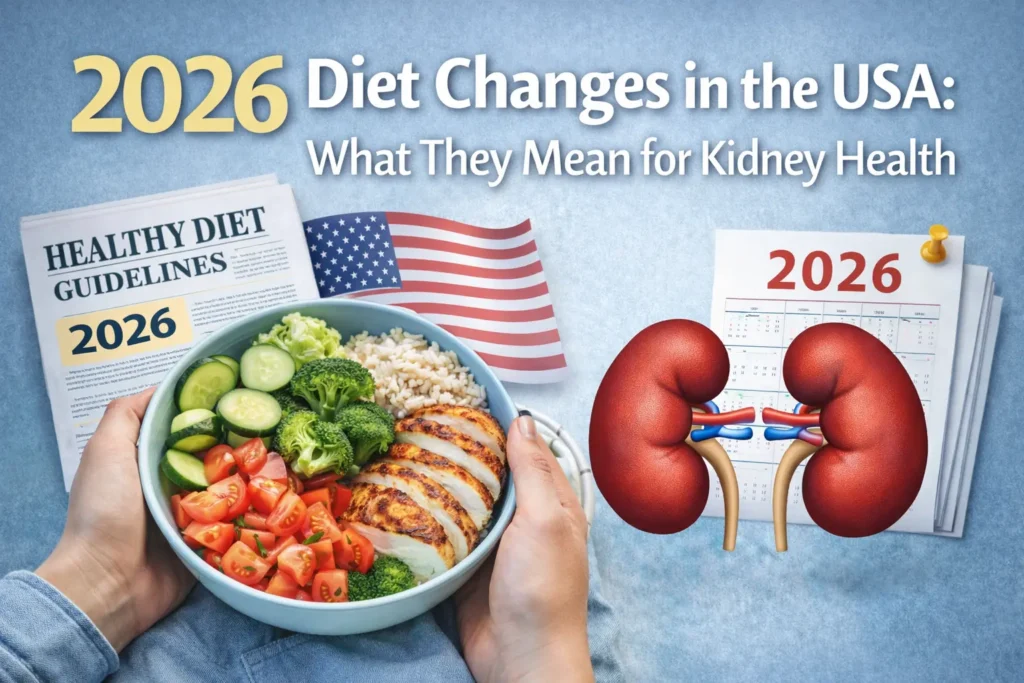
Before jumping into what makes kidneys function well, it’s good to know how U.S. diet rules have changed by 2026. Even kidneys want a bit of info before they act.
By 2026, U.S. diet plans—mostly shown by the MyPlate method—are no longer about hard food rules or very strict diet plans. This way of eating is about doable, fair eating that does not harm health for a long time and does not make food a hassle.
The new rules tell folks to:
- Add more fruits and vegetables
- Pick whole grains over refined grains
- Eat enough, not way too much, protein
- Add small amounts of healthy fats
- Cut down on added sugars, too much salt, and very processed foods
The main point is still balance. No food is “bad” but eating too much of any one thing can cause problems. Now, let’s look at how these rules match a diet that is safe for kidneys in the U.S. (2026).
How are Kidney Health and Diet Related?
Your kidneys work quietly all the time. They clear out waste, control your body’s fluids, keep minerals in check, manage blood pressure, and help all of meta-bolic health. Bad eating habits make them work much harder.
That’s why what you eat and kidney health are so A-close. A lot of salt, excess protein, and ultra processed foods create problems for the kidneys. What helps are fresh foods, not too much of anything, water, and balanced nutrients.
Is the 2026 American Diet Good for Kidneys?
The good thing is the 2026 U.S. dietary guidelines can help kidney health if you follow them with care. Here’s how each kind of food affects your kidneys. Whole Grains: Something Good for Kidneys Whole grains such as oats, brown rice, quinoa, and whole wheat are very good. They do not raise blood sugar quickly. Instead, they raise blood sugar slowly. This helps keep blood sugar stable. This is a good thing because diabetes is still one of the main reasons for kidney problems. White bread and white rice are like refined grains. They do cause your blood sugar to jump up fast and put more work on the kidney blood vessels. For kidney health, slow and steady always wins.
Vegetables: Essential, With Portion Awareness
Vegetables play a major role in controlling blood pressure, reducing inflammation, and improving digestion—all kidney-friendly benefits. However, some vegetables are high in potassium.
Healthy kidneys manage potassium well, but weakened kidneys may struggle. This doesn’t mean vegetables should be avoided—only that variety, portion size, and cooking methods matter.
Fruits: Nutritious but Not Unlimited
Fruits are encouraged daily in the 2026 diet, and kidneys benefit from their antioxidants and fiber. However, fruits also contain natural sugar and potassium.
Kidney-friendly options often include apples, berries, grapes, and pears. Fruits like bananas, oranges, and mangoes may need portion control if kidney function is reduced. Moderation keeps kidneys comfortable.
Protein: Necessary, Not Excessive
Protein remains essential, but excess intake creates more waste for the kidneys to filter. This is especially important for people with reduced kidney function and healthy kidney lifestyle.
Lean proteins such as fish, eggs, lentils, beans, and moderate portions of poultry are better choices. Red meat and processed meats should be limited. Think of protein as helpful weight training—effective in moderation, exhausting when overdone.
Dairy: Useful but Controlled
Milk, yogurt, and cheese provide calcium and vitamin D, but they also contain phosphorus and potassium. In kidney disease, these minerals can build up and cause complications.
The 2026 guidance supports controlled dairy intake, not excessive consumption. Sensible portions protect both bones and kidneys.
Fats: Focus on Quality
Healthy fats from olive oil, nuts, seeds, and fish help reduce inflammation and support heart health. Unhealthy fats increase blood pressure and damage blood vessels, making kidney function more difficult. Kidneys prefer smooth circulation, not added pressure.
Salt: Small Amount, Big Impact
Excess salt is one of the biggest threats to kidney health. High sodium intake raises blood pressure, which gradually damages kidney function. Ultra-processed foods and restaurant meals often contain hidden sodium.
Cooking at home and using herbs instead of excess salt helps keep kidneys relaxed and cooperative.
Water: Balance Matters
Water is essential for removing waste, but more is not always better. The 2026 guidelines emphasize water over sugary drinks, which supports kidney health.
However, people with kidney disease should follow their doctor’s fluid recommendations. Kidneys function best with balance, not extremes.
Final Thoughts: Your Kidneys and The 2026 Diet Are in Agreement
The 2026 American diet guidelines do not harm the kidney. Actually, smart use of them can do much to promote kidney health. Proper portions of foods, not enough salt and protein, few processed foods, and good use of fluid all matter.
FAQ
Is the 2026 U.S. diet safe for kidney patients?
It can be kidney-friendly when adapted properly. Kidney patients usually need lower protein and sodium intake, along with stricter portion control, than what general dietary guidelines recommend.
What foods support kidney health in 2026?
Fresh fruits, seasonal vegetables, whole grains in controlled portions, healthy fats, and low-sodium, home-cooked meals are most beneficial for kidney health.
Are high-protein diets harmful to kidneys in 2026?
Yes, especially for people with kidney disease. High-protein diets increase waste production, forcing weakened kidneys to work harder.
What do the latest Dietary Guidelines for Americans focus on?
They emphasize whole foods, reduced intake of ultra-processed products, balanced nutrition, and eating patterns that support long-term health.
What are five key updates in the new food guide?
-
Greater emphasis on plant-based foods
-
Strong caution against ultra-processed foods
-
Reduced added sugar intake
-
Improved fat quality with less saturated fat
-
Increased focus on personalized nutrition needs